


Page 248 - Statistics II for Dummies
P. 248
232        Part IV: Building Strong Connections with Chi-Square Tests


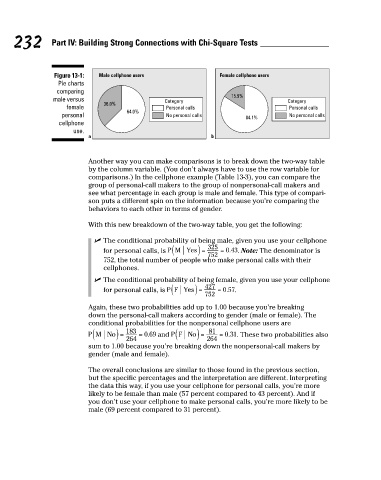
                       Figure 13-1:   Male cellphone users           Female cellphone users
                        Pie charts
                       comparing
                      male versus                    Category           15.9%           Category
                                    36.0%
                          female                      Personal calls                    Personal calls
                                           64.0%
                         personal                     No personal calls     84.1%       No personal calls
                        cellphone
                            use.
                                  a                               b

                                Another way you can make comparisons is to break down the two-way table
                                by the column variable. (You don’t always have to use the row variable for
                                comparisons.) In the cellphone example (Table 13-3), you can compare the
                                group of personal-call makers to the group of nonpersonal-call makers and
                                see what percentage in each group is male and female. This type of compari-
                                son puts a different spin on the information because you’re comparing the
                                behaviors to each other in terms of gender.
                                With this new breakdown of the two-way table, you get the following:

                                  ✓ The conditional probability of being male, given you use your cellphone
                                     for personal calls, is               . Note: The denominator is
                                     752, the total number of people who make personal calls with their
                                    cellphones.
                                  ✓ The conditional probability of being female, given you use your cellphone
                                     for personal calls, is              .

                                Again, these two probabilities add up to 1.00 because you’re breaking
                                down the personal-call makers according to gender (male or female). The
                                conditional probabilities for the nonpersonal cellphone users are
                                                    and                  . These two probabilities also
                                sum to 1.00 because you’re breaking down the nonpersonal-call makers by
                                gender (male and female).

                                The overall conclusions are similar to those found in the previous section,
                                but the specific percentages and the interpretation are different. Interpreting
                                the data this way, if you use your cellphone for personal calls, you’re more
                                likely to be female than male (57 percent compared to 43 percent). And if
                                you don’t use your cellphone to make personal calls, you’re more likely to be
                                male (69 percent compared to 31 percent).


          20_466469-ch13.indd   232                                                                   7/24/09   9:47:59 AM

