


Page 272 - Statistics II for Dummies
P. 272
256        Part IV: Building Strong Connections with Chi-Square Tests


                                   Table 14-3         Gender and Opinion on Cellphone Ban:
                                                              Observed Cell Counts
                                                   Agree with       Disagree with    Marginal Row
                                                   Cellphone Ban    Cellphone Ban    Totals
                                  Men              12               48               60
                                  Women            9                51               60
                                  Marginal         21               99               120 (Grand Total)
                                  Column Totals


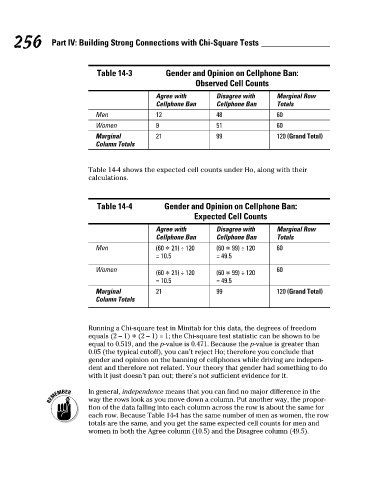
                                Table 14-4 shows the expected cell counts under Ho, along with their
                                calculations.


                                   Table 14-4        Gender and Opinion on Cellphone Ban:
                                                              Expected Cell Counts
                                                   Agree with       Disagree with    Marginal Row
                                                   Cellphone Ban    Cellphone Ban    Totals
                                  Men              (60 * 21) ÷ 120   (60 * 99) ÷ 120   60
                                                   = 10.5           = 49.5
                                  Women                                              60
                                                   (60 * 21) ÷ 120   (60 * 99) ÷ 120
                                                   = 10.5           = 49.5
                                  Marginal         21               99               120 (Grand Total)
                                  Column Totals


                                Running a Chi-square test in Minitab for this data, the degrees of freedom
                                equals (2 – 1) * (2 – 1) = 1; the Chi-square test statistic can be shown to be
                                equal to 0.519, and the p-value is 0.471. Because the p-value is greater than
                                0.05 (the typical cutoff), you can’t reject Ho; therefore you conclude that
                                gender and opinion on the banning of cellphones while driving are indepen-
                                dent and therefore not related. Your theory that gender had something to do
                                with it just doesn’t pan out; there’s not sufficient evidence for it.

                                In general, independence means that you can find no major difference in the
                                way the rows look as you move down a column. Put another way, the propor-
                                tion of the data falling into each column across the row is about the same for
                                each row. Because Table 14-4 has the same number of men as women, the row
                                totals are the same, and you get the same expected cell counts for men and
                                women in both the Agree column (10.5) and the Disagree column (49.5).


          21_466469-ch14.indd   256                                                                   7/24/09   9:51:31 AM

