


Page 490 -
P. 490
86    ROCHELLE R. BRUNSON AND MARLENE M. REED


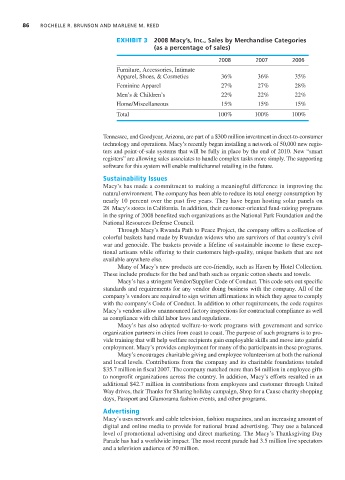
                                          EXHIBIT 3   2008 Macy’s, Inc., Sales by Merchandise Categories
                                                      (as a percentage of sales)

                                                                            2008        2007        2006
                                          Furniture, Accessories, Intimate
                                          Apparel, Shoes, & Cosmetics       36%         36%         35%
                                          Feminine Apparel                  27%         27%         28%
                                          Men’s & Children’s                22%         22%         22%
                                          Home/Miscellaneous                15%         15%         15%

                                          Total                            100%        100%        100%


                                      Tennessee, and Goodyear, Arizona, are part of a $300 million investment in direct-to-consumer
                                      technology and operations. Macy’s recently began installing a network of 50,000 new regis-
                                      ters and point-of-sale systems that will be fully in place by the end of 2010. New “smart
                                      registers” are allowing sales associates to handle complex tasks more simply. The supporting
                                      software for this system will enable multichannel retailing in the future.

                                      Sustainability Issues
                                      Macy’s has made a commitment to making a meaningful difference in improving the
                                      natural environment. The company has been able to reduce its total energy consumption by
                                      nearly 10 percent over the past five years. They have begun hosting solar panels on
                                      28 Macy’s stores in California. In addition, their customer-oriented fund-raising programs
                                      in the spring of 2008 benefited such organizations as the National Park Foundation and the
                                      National Resources Defense Council.
                                          Through Macy’s Rwanda Path to Peace Project, the company offers a collection of
                                      colorful baskets hand made by Rwandan widows who are survivors of that country’s civil
                                      war and genocide. The baskets provide a lifeline of sustainable income to these excep-
                                      tional artisans while offering to their customers high-quality, unique baskets that are not
                                      available anywhere else.
                                          Many of Macy’s new products are eco-friendly, such as Haven by Hotel Collection.
                                      These include products for the bed and bath such as organic cotton sheets and towels.
                                          Macy’s has a stringent Vendor/Supplier Code of Conduct. This code sets out specific
                                      standards and requirements for any vendor doing business with the company. All of the
                                      company’s vendors are required to sign written affirmations in which they agree to comply
                                      with the company’s Code of Conduct. In addition to other requirements, the code requires
                                      Macy’s vendors allow unannounced factory inspections for contractual compliance as well
                                      as compliance with child labor laws and regulations.
                                          Macy’s has also adopted welfare-to-work programs with government and service
                                      organization partners in cities from coast to coast. The purpose of such programs is to pro-
                                      vide training that will help welfare recipients gain employable skills and move into gainful
                                      employment. Macy’s provides employment for many of the participants in these programs.
                                          Macy’s encourages charitable giving and employee volunteerism at both the national
                                      and local levels. Contributions from the company and its charitable foundations totaled
                                      $35.7 million in fiscal 2007. The company matched more than $4 million in employee gifts
                                      to nonprofit organizations across the country. In addition, Macy’s efforts resulted in an
                                      additional $42.7 million in contributions from employees and customer through United
                                      Way drives, their Thanks for Sharing holiday campaign, Shop for a Cause charity shopping
                                      days, Passport and Glamorama fashion events, and other programs.
                                      Advertising
                                      Macy’s uses network and cable television, fashion magazines, and an increasing amount of
                                      digital and online media to provide for national brand advertising. They use a balanced
                                      level of promotional advertising and direct marketing. The Macy’s Thanksgiving Day
                                      Parade has had a worldwide impact. The most recent parade had 3.5 million live spectators
                                      and a television audience of 50 million.

