


Page 179 - Bruce Ellig - The Complete Guide to Executive Compensation (2007)
P. 179
Chapter 4. The Stakeholders                     165


               For years the view shared by many was that the shareholder was the most important
           stakeholder. That view has changed over time. A number of very successful companies now
           believe that employees should come first, followed by customers, suppliers, the community,
           and then the shareholders. The rationale is simple. The unique competitive advantage that a
           company has is its workforce. Treated with respect, fairness, and honesty, the company stands
           a good chance of gaining a committed workforce—one that likes to work for the company.
           This positive attitude rubs off on the customer, supplier, and community. This in turn should
           lead to financial success, which means that shareholders will get a return on their investment,
           and the company will have funds available for reinvestment in the business and reward
           executives for their performance
               While shareholders may invest a portion of their financial capital in the stock of a com-
           pany, it is the employees (executives included) who invest all of the human and intellectual
           capital. Both expect to be compensated for their investments. If not, they will look elsewhere.
           Also, when discussing shareholders, distinguish between an investor (ready to quickly buy or
           sell the stock depending on its short-term outlook) versus an owner (who is committed to the
           long-term success of the organization). Shareholder value is an end result for the investor; it
           is an interim measuring stick for the owner.
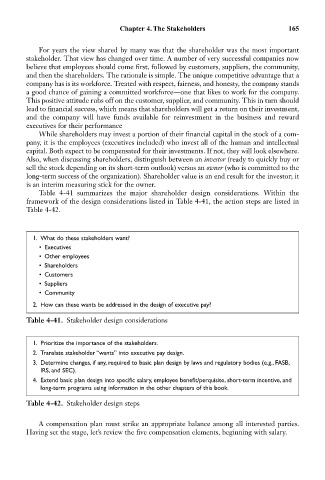
               Table 4-41 summarizes the major shareholder design considerations. Within the
           framework of the design considerations listed in Table 4-41, the action steps are listed in
           Table 4-42.


             1. What do these stakeholders want?
               • Executives
               • Other employees
               • Shareholders
               • Customers
               • Suppliers
               • Community
             2. How can these wants be addressed in the design of executive pay?

           Table 4-41. Stakeholder design considerations


             1. Prioritize the importance of the stakeholders.
             2. Translate stakeholder “wants” into executive pay design.
             3. Determine changes, if any, required to basic plan design by laws and regulatory bodies (e.g., FASB,
               IRS, and SEC).
             4. Extend basic plan design into specific salary, employee benefit/perquisite, short-term incentive, and
               long-term programs using information in the other chapters of this book.
           Table 4-42. Stakeholder design steps


               A compensation plan must strike an appropriate balance among all interested parties.
           Having set the stage, let’s review the five compensation elements, beginning with salary.

