


Page 236 - The Green Building Bottom Line The Real Cost of Sustainable Building
P. 236
214  CHAPTER 7


                                                                        Institutional Debt
                                3%   5%  2%                             Institutional Equity
                            3%
                       10%
                                                                        New Markets Tax Credits
                                                                        City Assistance
                                                                        Historic Tax Credits
                                                                        Melaver Deferred Fees
                     18%                                      59%       Melaver Cash Equity


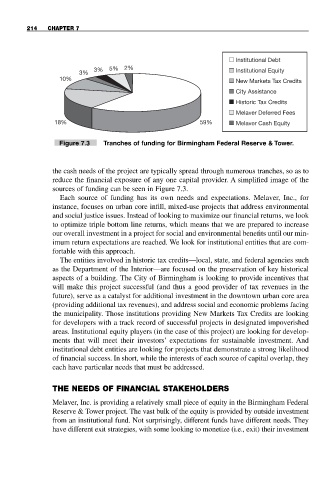
                       Figure 7.3  Tranches of funding for Birmingham Federal Reserve & Tower.


                     the cash needs of the project are typically spread through numerous tranches, so as to
                     reduce the financial exposure of any one capital provider. A simplified image of the
                     sources of funding can be seen in Figure 7.3.
                       Each source of funding has its own needs and expectations. Melaver, Inc., for
                     instance, focuses on urban core infill, mixed-use projects that address environmental
                     and social justice issues. Instead of looking to maximize our financial returns, we look
                     to optimize triple bottom line returns, which means that we are prepared to increase
                     our overall investment in a project for social and environmental benefits until our min-
                     imum return expectations are reached. We look for institutional entities that are com-
                     fortable with this approach.
                       The entities involved in historic tax credits—local, state, and federal agencies such
                     as the Department of the Interior—are focused on the preservation of key historical
                     aspects of a building. The City of Birmingham is looking to provide incentives that
                     will make this project successful (and thus a good provider of tax revenues in the
                     future), serve as a catalyst for additional investment in the downtown urban core area
                     (providing additional tax revenues), and address social and economic problems facing
                     the municipality. Those institutions providing New Markets Tax Credits are looking
                     for developers with a track record of successful projects in designated impoverished
                     areas. Institutional equity players (in the case of this project) are looking for develop-
                     ments that will meet their investors’ expectations for sustainable investment. And
                     institutional debt entities are looking for projects that demonstrate a strong likelihood
                     of financial success. In short, while the interests of each source of capital overlap, they
                     each have particular needs that must be addressed.


                     THE NEEDS OF FINANCIAL STAKEHOLDERS
                     Melaver, Inc. is providing a relatively small piece of equity in the Birmingham Federal
                     Reserve & Tower project. The vast bulk of the equity is provided by outside investment
                     from an institutional fund. Not surprisingly, different funds have different needs. They
                     have different exit strategies, with some looking to monetize (i.e., exit) their investment

