


Page 271 - The Handbook of Persuasion and Social Marketing
P. 271
Public Support for Regulating the Public                           247

               community nor an endorsement of the new perspective. We are suggesting
               that the view that “public health focuses on the health of populations. . . .
               It reflects systemic forces . . . necessitating interventions that span many
               levels of society” (Wallack & Lawrence, 2005, p. 567) is the view that is
               driving a great deal of health policy. In essence, over the past few decades,
               the conversation in the public health literature has evolved from making
               the case that upstream approaches are often required, to defending the role
               of modern public health advocates as agents of political change, to provid-
               ing advice to public health agents regarding how to bring about political
               change. And yet marketing is absent in most of these conversations, de-
               spite the fact that both industry and consumers are greatly affected.


                  The Spectrum of Upstream Remedies

                  The range of restrictive remedies is large and amorphous. Examples of
               such remedies include smoking restrictions, drinking and driving restric-
               tions, helmet laws, seat belt laws, trans-fat bans, laws requiring gun locks,
               age restrictions on various activities, vaccination laws for diseases that are
               not highly contagious, and so on. To develop some structure to upstream
               remedies, this chapter outlines a spectrum of the types of remedies that fall
               within the scope of this paper and provides a set of concrete examples in
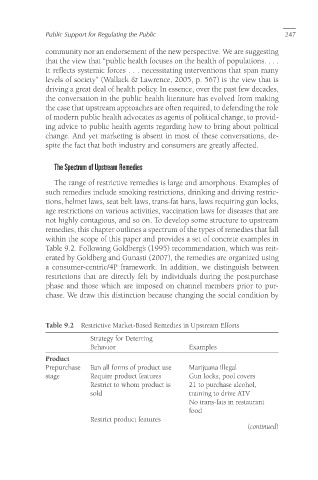
               Table 9.2. Following Goldberg’s (1995) recommendation, which was reit-
               erated by Goldberg and Gunasti (2007), the remedies are organized using
               a consumer-centric/4P framework. In addition, we distinguish between
               restrictions that are directly felt by individuals during the postpurchase
               phase and those which are imposed on channel members prior to pur-
               chase. We draw this distinction because changing the social condition by


               table 9.2  Restrictive Market-Based Remedies in Upstream Efforts
                            Strategy for Deterring
                            Behavior                   Examples
               Product
               Prepurchase   Ban all forms of product use  Marijuana illegal
               stage        Require product features   Gun locks, pool covers
                            Restrict to whom product is    21 to purchase alcohol,
                            sold                       training to drive ATV
                                                       No trans-fats in restaurant
                                                       food
                            Restrict product features
                                                                        (continued)

