


Page 336 - Water Loss Control
P. 336
Contr olling Real Losses—Pr essur e Management      305


                                                      Reservoir


                                                            A
                                          Flow control bypass  Altitude valve to
                                          to ensure minimum    stop overflow at
                                          required flow        off peak hours
                        Large demand area takes
                        all water at peak hour   F
                                                RS
                                      Pressure reducing for downstream pressure at night
                                      Pressure sustaining to maintain storage at peak flow

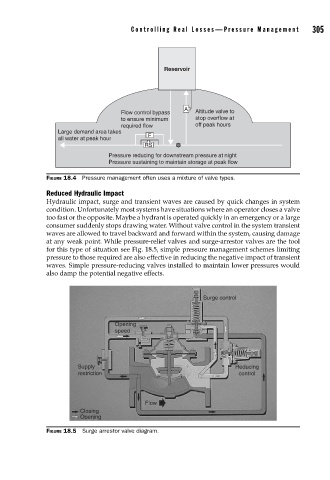
                    FIGURE 18.4  Pressure management often uses a mixture of valve types.

                    Reduced Hydraulic Impact
                    Hydraulic impact, surge and transient waves are caused by quick changes in system
                    condition. Unfortunately most systems have situations where an operator closes a valve
                    too fast or the opposite. Maybe a hydrant is operated quickly in an emergency or a large
                    consumer suddenly stops drawing water. Without valve control in the system transient
                    waves are allowed to travel backward and forward within the system, causing damage
                    at any weak point. While pressure-relief valves and surge-arrestor valves are the tool
                    for this type of situation see Fig. 18.5, simple pressure management schemes limiting
                    pressure to those required are also effective in reducing the negative impact of transient
                    waves. Simple pressure-reducing valves installed to maintain lower pressures would
                    also damp the potential negative effects.


                                                                 Surge control


                                        Opening
                                        speed


                             Supply                                       Reducing
                             restriction                                   control


                                                Flow
                              Closing
                              Opening
                    FIGURE 18.5  Surge arrestor valve diagram.

