


Page 344 - Applied Process Design For Chemical And Petrochemical Plants Volume III
P. 344
66131_Ludwig_CH11A  5/30/2001 4:49 PM  Page 302


                       302                       Applied Process Design for Chemical and Petrochemical Plants

                                                                                                  Table 11-1
                                                                                   Representative Single-Stage Absorption Plant
                                                                                             Operating Conditions

                                                                                                         (1)    (2)*   (3)*
                                                                             Tons Refrigeration        500    650     800

                                                                                                          o
                                                                                                 Temperature,  F
                                                                             Brine to evaporator (or cooler)  . . .  a   16
                                                                             Brine from evaporator        . . .  a    20
                                                                             Evaporator                 14.8    29    30.8
                                                                             Weak aqua to absorbers     112    126    102
                                                                             Strong aqua from absorbers  89.6  104     90
                                                                             Water to absorbers          87.8   86.7   70
                                                                             Water from absorbers        99     94.1   79
                                                                             Strong aqua from heat exchangers  224.5  178  248
                                                                             Weak aqua to heat exchangers  271  210   283
                                                                             Liquid ammonia from condenser  85.1  93   92
                                                                             Water to condenser          77     81     79
                                                                             Water from condenser        87.8   86.7   87.3
                                                                             Steam in generator         272 b  222    298
                                                                                                 Pressure, Psig
                                                                             Evaporator                  6      43.8    2.3 in. Hg.
                                                                             Absorbers                   6      43.8    2.3 in. Hg.
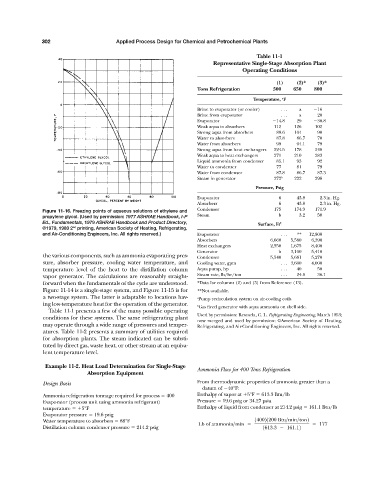
                       Figure 11-16. Freezing points of aqueous solutions of ethylene and  Condenser    175    174.9  171.9
                       propylene glycol. (Used by permission: 1977 ASHRAE Handbook, I-P  Steam           b      3.2    50
                       Ed., Fundamentals, 1979 ASHRAE Handbook and Product Directory,             Surface, Ft 2
                       ©1979, 1980 2 printing, American Society of Heating, Refrigerating,
                                  nd
                       and Air-Conditioning Engineers, Inc. All rights reserved.)  Evaporator             . . .  **  12,800
                                                                             Absorbers                6,660   5,580  6,390
                                                                             Heat exchangers          2,550   1,675  8,400
                                                                             Generator                   b    3,100  5,410
                       the various components, such as ammonia evaporating pres-  Condenser           5,540   5,661  5,270
                       sure, absorber pressure, cooling water temperature, and  Cooling water, gpm        . . . 3,600  4,000
                       temperature level of the heat to the distillation column  Aqua pump, hp            . . .  40    50
                       vapor generator. The calculations are reasonably straight-  Steam rate, lb/hr/ton  . . .  24.6  36.1
                       forward when the fundamentals of the cycle are understood.  *Data for columns (2) and (3) from Reference (13).
                       Figure 11-14 is a single-stage system, and Figure 11-15 is for  **Not available.
                       a two-stage system. The latter is adaptable to locations hav-  a Pump recirculation system on air-cooling coils.
                       ing low-temperature heat for the operation of the generator.  b Gas fired generator with aqua ammonia on shell side.
                         Table 11-1 presents a few of the many possible operating
                                                                             Used by permission: Rescorla, C. L. Refrigerating Engineering, March 1953;
                       conditions for these systems. The same refrigerating plant
                                                                             now merged and used by permission: ©American Society of Heating,
                       may operate through a wide range of pressures and temper-  Refrigerating, and Air-Conditioning Engineers, Inc. All rights reserved.
                       atures. Table 11-2 presents a summary of utilities required
                       for absorption plants. The steam indicated can be substi-
                       tuted by direct gas, waste heat, or other stream at an equiva-
                       lent temperature level.
                        Example 11-2. Heat Load Determination for Single-Stage
                                                                             Ammonia Flow for 400 Tons Refrigeration
                                       Absorption Equipment
                       Design Basis                                          From thermodynamic properties of ammonia greater than a
                                                                               datum of  40°F:
                       Ammonia refrigeration tonnage required for process   400  Enthalpy of vapor at  5°F   613.3 Btu/lb
                       Evaporator (process unit using ammonia refrigerant)   Pressure   19.6 psig or 34.27 psia
                       temperature   5°F                                     Enthalpy of liquid from condenser at 214.2 psig   161.1 Btu/lb
                       Evaporator pressure   19.6 psig
                       Water temperature to absorbers   88°F                                     140021200 Btu>min>ton2
                                                                             Lb of ammonia>min                           177
                       Distillation column condenser pressure   214.2 psig                          1613.3     161.12

