


Page 222 - Biofuels for a More Sustainable Future
P. 222
198   Biofuels for a More Sustainable Future


             400
                                               60
             300                               50
            $ (millions)   200                $ (millions)   40
                                               30
             100
                                               10
               -                               20
                  Costs   Benefits  Revenue
                                                -
            –100
                                                   Costs   Benefits  Revenue
            –200
                                               Annual—cultivation
               Capital                         Annual—production
               Annual—extraction               Co-product—Roselle dried calyces
               Biodiesel and glycerin          Other co-products (phytosterol/sugar/vitamine E)
               Co-product—Vernicia oil
            (A)                            (B)
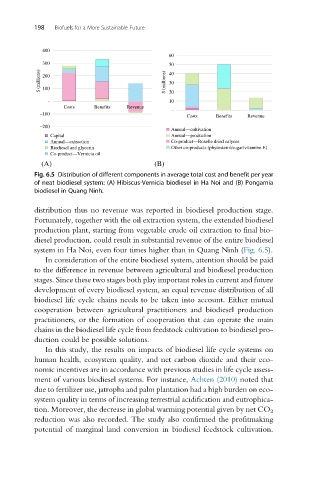
          Fig. 6.5 Distribution of different components in average total cost and benefit per year
          of neat biodiesel system: (A) Hibiscus-Vernicia biodiesel in Ha Noi and (B) Pongamia
          biodiesel in Quang Ninh.

          distribution thus no revenue was reported in biodiesel production stage.
          Fortunately, together with the oil extraction system, the extended biodiesel
          production plant, starting from vegetable crude oil extraction to final bio-
          diesel production, could result in substantial revenue of the entire biodiesel
          system in Ha Noi, even four times higher than in Quang Ninh (Fig. 6.5).
             In consideration of the entire biodiesel system, attention should be paid
          to the difference in revenue between agricultural and biodiesel production
          stages. Since these two stages both play important roles in current and future
          development of every biodiesel system, an equal revenue distribution of all
          biodiesel life cycle chains needs to be taken into account. Either mutual
          cooperation between agricultural practitioners and biodiesel production
          practitioners, or the formation of cooperation that can operate the main
          chains in the biodiesel life cycle from feedstock cultivation to biodiesel pro-
          duction could be possible solutions.
             In this study, the results on impacts of biodiesel life cycle systems on
          human health, ecosystem quality, and net carbon dioxide and their eco-
          nomic incentives are in accordance with previous studies in life cycle assess-
          ment of various biodiesel systems. For instance, Achten (2010) noted that
          due to fertilizer use, jatropha and palm plantation had a high burden on eco-
          system quality in terms of increasing terrestrial acidification and eutrophica-
          tion. Moreover, the decrease in global warming potential given by net CO 2
          reduction was also recorded. The study also confirmed the profitmaking
          potential of marginal land conversion in biodiesel feedstock cultivation.

