


Page 125 - Biorefinery 2030 Future Prospects for the Bioeconomy (2015)
P. 125
4  Potential for Integration with the Downstream Value Chain    93


                                                                     #
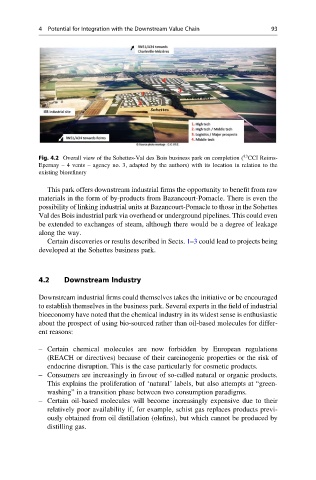
            Fig. 4.2 Overall view of the Sohettes-Val des Bois business park on completion ( CCI Reims-
            Epernay – 4 vents – agency no. 3, adapted by the authors) with its location in relation to the
            existing biorefinery
              This park offers downstream industrial firms the opportunity to benefit from raw
            materials in the form of by-products from Bazancourt-Pomacle. There is even the
            possibility of linking industrial units at Bazancourt-Pomacle to those in the Sohettes
            Val des Bois industrial park via overhead or underground pipelines. This could even
            be extended to exchanges of steam, although there would be a degree of leakage
            along the way.
              Certain discoveries or results described in Sects. 1–3 could lead to projects being
            developed at the Sohettes business park.


            4.2    Downstream Industry

            Downstream industrial firms could themselves takes the initiative or be encouraged
            to establish themselves in the business park. Several experts in the field of industrial
            bioeconomy have noted that the chemical industry in its widest sense is enthusiastic
            about the prospect of using bio-sourced rather than oil-based molecules for differ-
            ent reasons:

            – Certain chemical molecules are now forbidden by European regulations
              (REACH or directives) because of their carcinogenic properties or the risk of
              endocrine disruption. This is the case particularly for cosmetic products.
            – Consumers are increasingly in favour of so-called natural or organic products.
              This explains the proliferation of ‘natural’ labels, but also attempts at “green-
              washing” in a transition phase between two consumption paradigms.
            – Certain oil-based molecules will become increasingly expensive due to their
              relatively poor availability if, for example, schist gas replaces products previ-
              ously obtained from oil distillation (olefins), but which cannot be produced by
              distilling gas.

