


Page 430 - Cam Design Handbook
P. 430
THB13  9/19/03  7:56 PM  Page 418

          418                      CAM DESIGN HANDBOOK


                                     k s   c

                                                 y
                                        m o


                                       k f    l b


                                              l ao
                                                 y c

                                          m f
                                              Cam
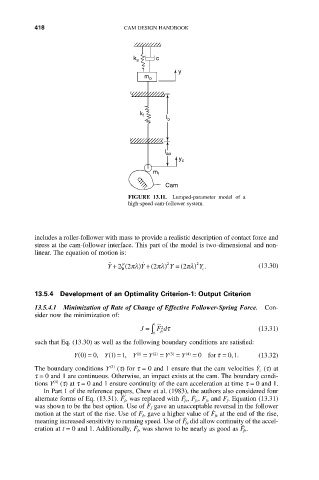
                                    FIGURE  13.11.  Lumped-parameter  model  of  a
                                    high-speed cam-follower system.


          includes a roller-follower with mass to provide a realistic description of contact force and
          stress at the cam-follower interface. This part of the model is two-dimensional and non-
          linear. The equation of motion is:
                              ˙˙
                                        ˙
                                   (
                              Y + 22zpl  Y ) + (2pl ) 2 Y = (2pl ) 2 Y  .  (13.30)
                                                        c
          13.5.4 Development of an Optimality Criterion-1: Output Criterion

          13.5.4.1 Minimization of Rate of Change of Effective Follower-Spring Force.  Con-
          sider now the minimization of:
                                           1
                                       J =  F dt                       (13.31)
                                           ˙˙˙2
                                          Ú 0  fe
          such that Eq. (13.30) as well as the following boundary conditions are satisfied:
                     Y 0 () =  0,  Y 1 () = 1,  Y  1 ()  =  Y  2 ( )  =  Y  3 ( )  =  Y  4 ( )  =  0 for t  =  0 1.  (13.32)
                                                                ,
                                                                       .
          The boundary conditions Y  (3)  (t) for t = 0 and 1 ensure that the cam velocities Y c (t) at
          t = 0 and 1 are continuous. Otherwise, an impact exists at the cam. The boundary condi-
               (4)
          tions Y (t) at t = 0 and 1 ensure continuity of the cam acceleration at time t = 0 and 1.
             In Part 1 of the reference papers, Chew et al. (1983), the authors also considered four
                                                     .
                                  ...
                                                  ¨
          alternate forms of Eq. (13.31). F fe was replaced with F fe, F fc, F fe and F f. Equation (13.31)
          was shown to be the best option. Use of F f gave an unacceptable reversal in the follower
                                                           .
          motion at the start of the rise. Use of F fe gave a higher value of F fe at the end of the rise,
                                                   ¨
          meaning increased sensitivity to running speed. Use of F fe did allow continuity of the accel-
                                      .
                                                                  ¨
          eration at t = 0 and 1. Additionally, F fe was shown to be nearly as good as F fe.

