


Page 432 - Corrosion Engineering Principles and Practice
P. 432
400   C h a p t e r   1 0     C o r r o s i o n   i n   S o i l s   a n d   M i c r o b i o l o g i c a l l y   I n f l u e n c e d   C o r r o s i o n    401


                                                                 Composite

                                                               3-layer PE
                                                       Fusion-bonded Epoxy

                                           PE Tape
                                                 Extruded 2-layer PE
                                  Asphalt

                             Wax Tape
                                 Coal Tar

                      1940    1950    1960   1970    1980    1990   2000    2010

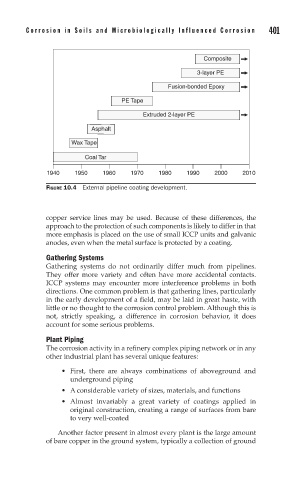
                      FIGURE 10.4  External pipeline coating development.


                      copper  service  lines  may  be  used.  Because  of  these  differences,  the
                      approach to the protection of such components is likely to differ in that
                      more emphasis is placed on the use of small ICCP units and galvanic
                      anodes, even when the metal surface is protected by a coating.
                      Gathering Systems
                      Gathering  systems  do  not  ordinarily  differ  much  from  pipelines.
                      They  offer  more  variety  and  often  have  more  accidental  contacts.
                      ICCP  systems  may  encounter  more  interference  problems  in  both
                      directions. One common problem is that gathering lines, particularly
                      in the early development of a field, may be laid in great haste, with
                      little or no thought to the corrosion control problem. Although this is
                      not,  strictly  speaking,  a  difference  in  corrosion  behavior,  it  does
                      account for some serious problems.
                      Plant Piping
                      The corrosion activity in a refinery complex piping network or in any
                      other industrial plant has several unique features:

                          •  First,  there  are  always  combinations  of  aboveground  and
                             underground piping
                          •  A considerable variety of sizes, materials, and functions
                          •  Almost  invariably  a  great  variety  of  coatings  applied  in
                             original construction, creating a range of surfaces from bare
                             to very well-coated
                         Another factor present in almost every plant is the large amount
                      of bare copper in the ground system, typically a collection of ground

