


Page 143 - Design of Solar Thermal Power Plants
P. 143
128         3. GENERAL DESIGN OF A SOLAR THERMAL POWER PLANT

                   40000
                   35000            Cleaning expense
                  Feed-in tariff loss /YUAN  25000  Feed-in tariffloss, 0.8 YUAN/kWh
                   30000
                                    Feed-in tariffloss, 1 YUAN/kWh

                   20000
                   15000
                   10000
                    5000
                      0
                       1     6     11    16    21    26    31    36    41
                                             Time/day
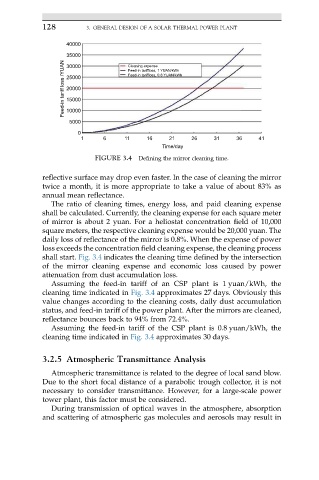
                           FIGURE 3.4  Defining the mirror cleaning time.

            reflective surface may drop even faster. In the case of cleaning the mirror
            twice a month, it is more appropriate to take a value of about 83% as
            annual mean reflectance.
               The ratio of cleaning times, energy loss, and paid cleaning expense
            shall be calculated. Currently, the cleaning expense for each square meter
            of mirror is about 2 yuan. For a heliostat concentration field of 10,000
            square meters, the respective cleaning expense would be 20,000 yuan. The
            daily loss of reflectance of the mirror is 0.8%. When the expense of power
            loss exceeds the concentration field cleaning expense, the cleaning process
            shall start. Fig. 3.4 indicates the cleaning time defined by the intersection
            of the mirror cleaning expense and economic loss caused by power
            attenuation from dust accumulation loss.
               Assuming the feed-in tariff of an CSP plant is 1 yuan/kWh, the
            cleaning time indicated in Fig. 3.4 approximates 27 days. Obviously this
            value changes according to the cleaning costs, daily dust accumulation
            status, and feed-in tariff of the power plant. After the mirrors are cleaned,
            reflectance bounces back to 94% from 72.4%.
               Assuming the feed-in tariff of the CSP plant is 0.8 yuan/kWh, the
            cleaning time indicated in Fig. 3.4 approximates 30 days.


            3.2.5 Atmospheric Transmittance Analysis
               Atmospheric transmittance is related to the degree of local sand blow.
            Due to the short focal distance of a parabolic trough collector, it is not
            necessary to consider transmittance. However, for a large-scale power
            tower plant, this factor must be considered.
               During transmission of optical waves in the atmosphere, absorption
            and scattering of atmospheric gas molecules and aerosols may result in

