


Page 243 - Design of Solar Thermal Power Plants
P. 243
226              4. DESIGN OF THE CONCENTRATION SYSTEM

            thermocouples; temperatures of various heat-absorbing surfaces can be
            determined, however, through the infrared camera monitoring method.
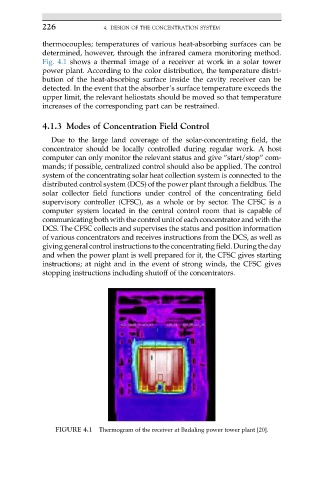
            Fig. 4.1 shows a thermal image of a receiver at work in a solar tower
            power plant. According to the color distribution, the temperature distri-
            bution of the heat-absorbing surface inside the cavity receiver can be
            detected. In the event that the absorber’s surface temperature exceeds the
            upper limit, the relevant heliostats should be moved so that temperature
            increases of the corresponding part can be restrained.

            4.1.3 Modes of Concentration Field Control

               Due to the large land coverage of the solar-concentrating field, the
            concentrator should be locally controlled during regular work. A host
            computer can only monitor the relevant status and give “start/stop” com-
            mands; if possible, centralized control should also be applied. The control
            system of the concentrating solar heat collection system is connected to the
            distributed control system (DCS) of the power plant through a fieldbus. The
            solar collector field functions under control of the concentrating field
            supervisory controller (CFSC), as a whole or by sector. The CFSC is a
            computer system located in the central control room that is capable of
            communicating both with the control unit of each concentrator and with the
            DCS. The CFSC collects and supervises the status and position information
            of various concentrators and receives instructions from the DCS, as well as
            giving general control instructions tothe concentrating field. During the day
            and when the power plant is well prepared for it, the CFSC gives starting
            instructions; at night and in the event of strong winds, the CFSC gives
            stopping instructions including shutoff of the concentrators.


                FIGURE 4.1  Thermogram of the receiver at Badaling power tower plant [20].

