


Page 241 - Dynamic Loading and Design of Structures
P. 241
Page 212


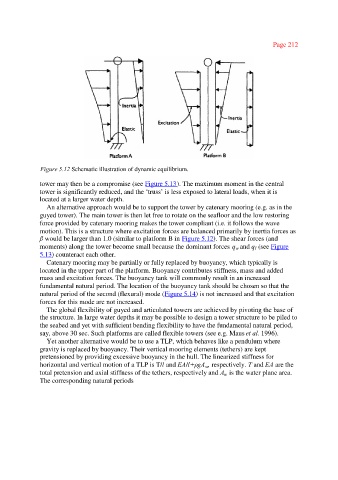
               Figure 5.12 Schematic illustration of dynamic equilibrium.

               tower may then be a compromise (see Figure 5.13). The maximum moment in the central
               tower is significantly reduced, and the ‘truss’ is less exposed to lateral loads, when it is
               located at a larger water depth.
                 An alternative approach would be to support the tower by catenary mooring (e.g. as in the
               guyed tower). The main tower is then let free to rotate on the seafloor and the low restoring
               force provided by catenary mooring makes the tower compliant (i.e. it follows the wave
               motion). This is a structure where excitation forces are balanced primarily by inertia forces as
               βwould be larger than 1.0 (similar to platform B in Figure 5.12). The shear forces (and
               moments) along the tower become small because the dominant forces q and q (see Figure
                                                                                           I
                                                                                    w
               5.13) counteract each other.
                 Catenary mooring may be partially or fully replaced by buoyancy, which typically is
               located in the upper part of the platform. Buoyancy contributes stiffness, mass and added
               mass and excitation forces. The buoyancy tank will commonly result in an increased
               fundamental natural period. The location of the buoyancy tank should be chosen so that the
               natural period of the second (flexural) mode (Figure 5.14) is not increased and that excitation
               forces for this mode are not increased.
                 The global flexibility of guyed and articulated towers are achieved by pivoting the base of
               the structure. In large water depths it may be possible to design a tower structure to be piled to
               the seabed and yet with sufficient bending flexibility to have the fundamental natural period,
               say, above 30 sec. Such platforms are called flexible towers (see e.g. Maus et al. 1996).
                 Yet another alternative would be to use a TLP, which behaves like a pendulum where
               gravity is replaced by buoyancy. Their vertical mooring elements (tethers) are kept
               pretensioned by providing excessive buoyancy in the hull. The linearized stiffness for
                                                                      g
               horizontal and vertical motion of a TLP is T/l and EA/l+ρA , respectively. T and EA are the
                                                                         w
               total pretension and axial stiffness of the tethers, respectively and A is the water plane area.
                                                                                w
               The corresponding natural periods

