


Page 424 - Electrical Properties of Materials
P. 424
406                           Artificial materials or metamaterials

                                            Natural materials               Artificial materials
                                                Crystal                     Photonic band gap
                                       λ~d                            λ~d
                                                          Bragg                           Bragg
                                                        diffraction                      diffraction
                                      X-rays,           band gaps  Visible, IR …         band gaps
                                     electrons
                                                d                               d


                                                Crystal                      Metamaterials
                                      λ>>d               Effective    λ>>d               Effective
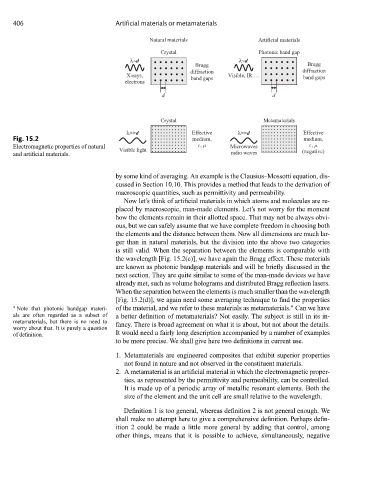
     Fig. 15.2                                           medium,                         medium,
     Electromagnetic properties of natural                ε, μ      Microwaves             ε, μ
                                    Visible light                                        (negative)
     and artificial materials.                                       radio waves


                                   by some kind of averaging. An example is the Clausius–Mossotti equation, dis-
                                   cussed in Section 10.10. This provides a method that leads to the derivation of
                                   macroscopic quantities, such as permittivity and permeability.
                                     Now let’s think of artificial materials in which atoms and molecules are re-
                                   placed by macroscopic, man-made elements. Let’s not worry for the moment
                                   how the elements remain in their allotted space. That may not be always obvi-
                                   ous, but we can safely assume that we have complete freedom in choosing both
                                   the elements and the distance between them. Now all dimensions are much lar-
                                   ger than in natural materials, but the division into the above two categories
                                   is still valid. When the separation between the elements is comparable with
                                   the wavelength [Fig. 15.2(c)], we have again the Bragg effect. These materials
                                   are known as photonic bandgap materials and will be briefly discussed in the
                                   next section. They are quite similar to some of the man-made devices we have
                                   already met, such as volume holograms and distributed Bragg reflection lasers.
                                   When the separation between the elements is much smaller than the wavelength
                                   [Fig. 15.2(d)], we again need some averaging technique to find the properties
                                                                                     ∗
     ∗  Note that photonic bandgap materi-  of the material, and we refer to these materials as metamaterials. Can we have
     als are often regarded as a subset of  a better definition of metamaterials? Not easily. The subject is still in its in-
     metamaterials, but there is no need to  fancy. There is broad agreement on what it is about, but not about the details.
     worry about that. It is purely a question
     of definition.                 It would need a fairly long description accompanied by a number of examples
                                   to be more precise. We shall give here two definitions in current use.

                                   1. Metamaterials are engineered composites that exhibit superior properties
                                     not found in nature and not observed in the constituent materials.
                                   2. A metamaterial is an artificial material in which the electromagnetic proper-
                                     ties, as represented by the permittivity and permeability, can be controlled.
                                     It is made up of a periodic array of metallic resonant elements. Both the
                                     size of the element and the unit cell are small relative to the wavelength.

                                     Definition 1 is too general, whereas definition 2 is not general enough. We
                                   shall make no attempt here to give a comprehensive definition. Perhaps defin-
                                   ition 2 could be made a little more general by adding that control, among
                                   other things, means that it is possible to achieve, simultaneously, negative

