


Page 440 - Electrical Properties of Materials
P. 440
422                           Artificial materials or metamaterials


                                                                                      Hyperlens
                                                                                      Imge
                                    Ag/Al O
                                        2 3
                                    multilayers
                                      Cr


                                                             Object
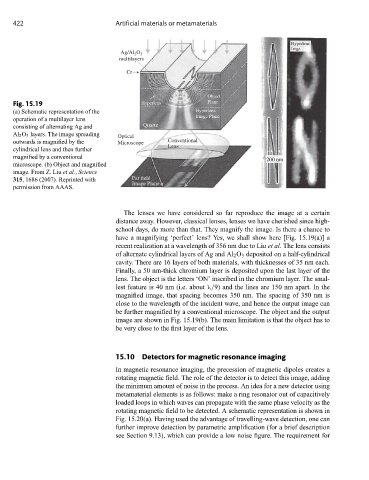
     Fig. 15.19                           Hyperlens          Plane
     (a) Schematic representation of the                  Hyperlens
                                                          Image Plane
     operation of a multilayer lens
     consisting of alternating Ag and      Quartz
     Al 2 O 3 layers. The image spreading  Optical
     outwards is magnified by the   Microscope     Conventional
     cylindrical lens and then further            Lens
     magnified by a conventional
                                                                              200 nm
     microscope. (b) Object and magnified
     image. From Z. Liu et al., Science
     315, 1686 (2007). Reprinted with  Far field
                                       Image Plane
     permission from AAAS.


                                     The lenses we have considered so far reproduce the image at a certain
                                   distance away. However, classical lenses, lenses we have cherished since high-
                                   school days, do more than that. They magnify the image. Is there a chance to
                                   have a magnifying ‘perfect’ lens? Yes, we shall show here [Fig. 15.19(a)] a
                                   recent realization at a wavelength of 356 nm due to Liu et al. The lens consists
                                   of alternate cylindrical layers of Ag and Al 2 O 3 deposited on a half-cylindrical
                                   cavity. There are 16 layers of both materials, with thicknesses of 35 nm each.
                                   Finally, a 50 nm-thick chromium layer is deposited upon the last layer of the
                                   lens. The object is the letters ‘ON’ inscribed in the chromium layer. The smal-
                                   lest feature is 40 nm (i.e. about λ/9) and the lines are 150 nm apart. In the
                                   magnified image, that spacing becomes 350 nm. The spacing of 350 nm is
                                   close to the wavelength of the incident wave, and hence the output image can
                                   be further magnified by a conventional microscope. The object and the output
                                   image are shown in Fig. 15.19(b). The main limitation is that the object has to
                                   be very close to the first layer of the lens.


                                   15.10  Detectors for magnetic resonance imaging
                                   In magnetic resonance imaging, the precession of magnetic dipoles creates a
                                   rotating magnetic field. The role of the detector is to detect this image, adding
                                   the minimum amount of noise in the process. An idea for a new detector using
                                   metamaterial elements is as follows: make a ring resonator out of capacitively
                                   loaded loops in which waves can propagate with the same phase velocity as the
                                   rotating magnetic field to be detected. A schematic representation is shown in
                                   Fig. 15.20(a). Having used the advantage of travelling-wave detection, one can
                                   further improve detection by parametric amplification (for a brief description
                                   see Section 9.13), which can provide a low noise figure. The requirement for

