


Page 562 - Fair, Geyer, and Okun's Water and wastewater engineering : water supply and wastewater removal
P. 562
JWCL344_ch14_500-554.qxd  8/7/10  8:56 PM  Page 520


                    520  Chapter 14  Design of Sewer Systems
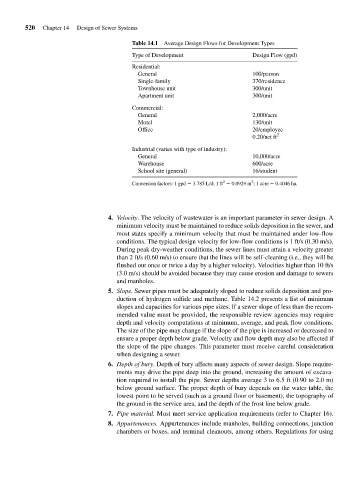
                                                    Table 14.1 Average Design Flows for Development Types

                                                    Type of Development                  Design Flow (gpd)
                                                    Residential:
                                                      General                            100/person
                                                      Single-family                      370/residence
                                                      Townhouse unit                     300/unit
                                                      Apartment unit                     300/unit

                                                    Commercial:
                                                      General                            2,000/acre
                                                      Motel                              130/unit
                                                      Office                             20/employee
                                                                                         0.20/net ft 2

                                                    Industrial (varies with type of industry):
                                                      General                            10,000/acre
                                                      Warehouse                          600/acre
                                                      School site (general)              16/student
                                                                                         2
                                                                                2
                                                    Conversion factors: 1 gpd   3.785 L/d; 1 ft   0.0929 m ; 1 acre   0.4046 ha.


                                             4. Velocity. The velocity of wastewater is an important parameter in sewer design. A
                                                minimum velocity must be maintained to reduce solids deposition in the sewer, and
                                                most states specify a minimum velocity that must be maintained under low-flow
                                                conditions. The typical design velocity for low-flow conditions is 1 ft/s (0.30 m/s).
                                                During peak dry-weather conditions, the sewer lines must attain a velocity greater
                                                than 2 ft/s (0.60 m/s) to ensure that the lines will be self-cleaning (i.e., they will be
                                                flushed out once or twice a day by a higher velocity). Velocities higher than 10 ft/s
                                                (3.0 m/s) should be avoided because they may cause erosion and damage to sewers
                                                and manholes.
                                             5. Slope. Sewer pipes must be adequately sloped to reduce solids deposition and pro-
                                                duction of hydrogen sulfide and methane. Table 14.2 presents a list of minimum
                                                slopes and capacities for various pipe sizes. If a sewer slope of less than the recom-
                                                mended value must be provided, the responsible review agencies may require
                                                depth and velocity computations at minimum, average, and peak flow conditions.
                                                The size of the pipe may change if the slope of the pipe is increased or decreased to
                                                ensure a proper depth below grade. Velocity and flow depth may also be affected if
                                                the slope of the pipe changes. This parameter must receive careful consideration
                                                when designing a sewer.
                                             6. Depth of bury. Depth of bury affects many aspects of sewer design. Slope require-
                                                ments may drive the pipe deep into the ground, increasing the amount of excava-
                                                tion required to install the pipe. Sewer depths average 3 to 6.5 ft (0.90 to 2.0 m)
                                                below ground surface. The proper depth of bury depends on the water table, the
                                                lowest point to be served (such as a ground floor or basement), the topography of
                                                the ground in the service area, and the depth of the frost line below grade.
                                             7. Pipe material. Must meet service application requirements (refer to Chapter 16).
                                             8. Appurtenances. Appurtenances include manholes, building connections, junction
                                                chambers or boxes, and terminal cleanouts, among others. Regulations for using

