


Page 126 - Fluid Power Engineering
P. 126
100    Cha pte r  F o u r


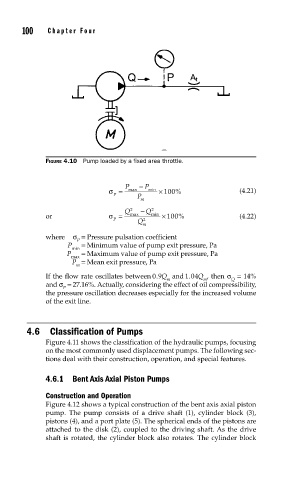
               FIGURE 4.10  Pump loaded by a fixed area throttle.


                                     P   −  P
                                 σ =  max  min  × 100 %             (4.21)
                                  P     P
                                         m
                                     Q  2  −  Q  2
               or                σ =  max   min  × 100 %            (4.22)
                                  P       2
                                         Q
                                          m
               where   σ  = Pressure pulsation coefficient
                        P
                     P    = Minimum value of pump exit pressure, Pa
                       min
                     P    = Maximum value of pump exit pressure, Pa
                      max
                       P  = Mean exit pressure, Pa
                        m
               If the flow rate oscillates between 09. Q and 104.  Q , then σ  = 14%
                                                 m         m      Q
               and σ  = 27.16%. Actually, considering the effect of oil compressibility,
                    P
               the pressure oscillation decreases especially for the increased volume
               of the exit line.
          4.6  Classification of Pumps
               Figure 4.11 shows the classification of the hydraulic pumps, focusing
               on the most commonly used displacement pumps. The following sec-
               tions deal with their construction, operation, and special features.

               4.6.1  Bent Axis Axial Piston Pumps


               Construction and Operation
               Figure 4.12 shows a typical construction of the bent axis axial piston
               pump. The pump consists of a drive shaft (1), cylinder block (3),
                 pistons (4), and a port plate (5). The spherical ends of the pistons are
               attached to the disk (2), coupled to the driving shaft. As the drive
               shaft is rotated, the cylinder block also rotates. The cylinder block

