


Page 122 - Fluid Power Engineering
P. 122
96    Cha pte r  F o u r


                   The mechanical power ω(T −  T F ) is converted into equal hydraulic
               power,  QP , then
                       tC
                                     η =  η η η                      (4.11)
                                      T    v  m  h
                   In the steady-state operation, the real displacement pump is
                 described by the following relations:
                                      Q = V nη v                    (4.12)
                                           g
                                              Δ= 2π
                             N =  N η  or  QP       nTη             (4.13)
                              h    m  T                 T
                                          V g
               Then                 T =        Δ P                  (4.14)
                                        2πη η
                                           m  h
               where  N = Hydraulic power, W
                       h
                     N = Mechanical power, W
                       m
                     ΔP = Difference between the pump output and input
                          pressures, ΔP = P − P , Pa
                                           i
                   If the pump input pressure, P , is too small compared with the
                                            i
               delivery pressure, P, then it may be neglected, and the pressure dif-
               ference, ΔP, equals the pump exit pressure, P. If so, then
                                          V g
                                     T =       P                    (4.15)
                                        2πη η
                                            m  h
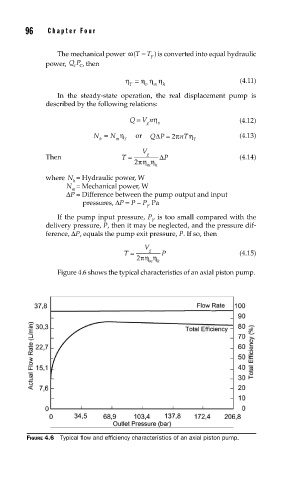
                   Figure 4.6 shows the typical characteristics of an axial piston pump.


          FIGURE 4.6  Typical fl ow and effi ciency characteristics of an axial piston pump.

