


Page 134 - Fluid Power Engineering
P. 134
108    Cha pte r  F o u r


               cam ring. The piston stroke, h, is twice the eccentricity, e. The pump
               geometric volume is given by

                                          π
                                             2
                                      V =   d ez                    (4.28)
                                       g
                                          2
               where e = Eccentricity, m.
               4.6.6  Radial Piston Pumps with Eccentric Shafts
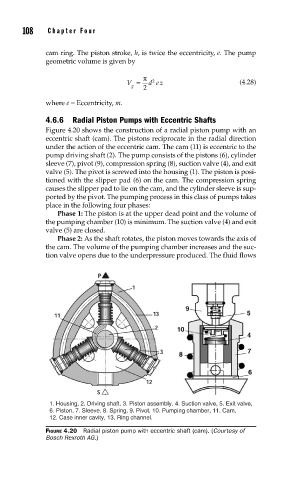
               Figure 4.20 shows the construction of a radial piston pump with an
               eccentric shaft (cam). The pistons reciprocate in the radial direction
               under the action of the eccentric cam. The cam (11) is eccentric to the
               pump driving shaft (2). The pump consists of the pistons (6), cylinder
               sleeve (7), pivot (9), compression spring (8), suction valve (4), and exit
               valve (5). The pivot is screwed into the housing (1). The piston is posi-
               tioned with the slipper pad (6) on the cam. The compression spring
               causes the slipper pad to lie on the cam, and the cylinder sleeve is sup-
               ported by the pivot. The pumping process in this class of pumps takes
               place in the following four phases:
                   Phase 1: The piston is at the upper dead point and the volume of
               the pumping chamber (10) is minimum. The suction valve (4) and exit
               valve (5) are closed.
                   Phase 2: As the shaft rotates, the pis ton moves towards the axis of
               the cam. The volume of the pumping chamber increases and the suc-
               tion valve opens due to the underpressure produ ced. The fluid flows


                1. Housing, 2. Driving shaft, 3. Piston assembly, 4. Suction valve, 5. Exit valve,
                6. Piston, 7. Sleeve, 8. Spring, 9. Pivot, 10. Pumping chamber, 11. Cam,
                12. Case inner cavity, 13. Ring channel.

               FIGURE 4.20  Radial piston pump with eccentric shaft (cam). (Courtesy of
               Bosch Rexroth AG.)

