


Page 138 - Fluid Power Engineering
P. 138
112    Cha pte r  F o u r


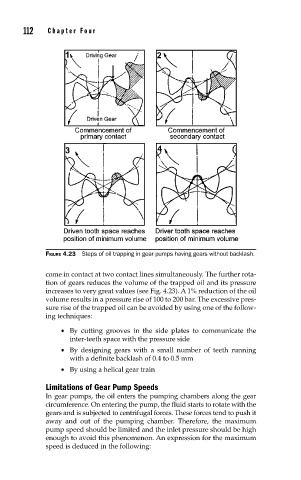
               FIGURE 4.23  Steps of oil trapping in gear pumps having gears without backlash.


               come in contact at two contact lines simultaneously. The further rota-
               tion of gears reduces the volume of the trapped oil and its pressure
               increases to very great values (see Fig. 4.23). A 1% reduction of the oil
               volume results in a pressure rise of 100 to 200 bar. The excessive pres-
               sure rise of the trapped oil can be avoided by using one of the follow-
               ing techniques:
                    •  By cutting grooves in the side plates to communicate the
                      inter-teeth space with the pressure side
                    •  By designing gears with a small number of teeth running
                      with a definite backlash of 0.4 to 0.5 mm
                    •  By using a helical gear train

               Limitations of Gear Pump Speeds
               In gear pumps, the oil enters the pumping chambers along the gear
               circumference. On entering the pump, the fluid starts to rotate with the
               gears and is subjected to centrifugal forces. These forces tend to push it
               away and out of the pumping chamber. Therefore, the maximum
               pump speed should be limited and the inlet pressure should be high
               enough to avoid this phenomenon. An expression for the maximum
               speed is deduced in the following:

