


Page 308 - Fundamentals of Ocean Renewable Energy Generating Electricity From The Sea
P. 308
Other Aspects of Ocean Renewable Energy Chapter | 10 293


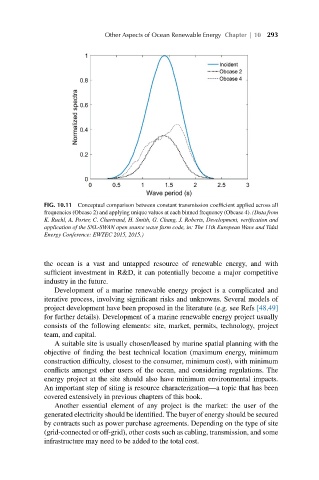
             FIG. 10.11  Conceptual comparison between constant transmission coefficient applied across all
             frequencies (Obcase 2) and applying unique values at each binned frequency (Obcase 4). (Data from
             K. Ruehl, A. Porter, C. Chartrand, H. Smith, G. Chang, J. Roberts, Development, verification and
             application of the SNL-SWAN open source wave farm code, in: The 11th European Wave and Tidal
             Energy Conference: EWTEC 2015, 2015.)


             the ocean is a vast and untapped resource of renewable energy, and with
             sufficient investment in R&D, it can potentially become a major competitive
             industry in the future.
                Development of a marine renewable energy project is a complicated and
             iterative process, involving significant risks and unknowns. Several models of
             project development have been proposed in the literature (e.g. see Refs [48,49]
             for further details). Development of a marine renewable energy project usually
             consists of the following elements: site, market, permits, technology, project
             team, and capital.
                A suitable site is usually chosen/leased by marine spatial planning with the
             objective of finding the best technical location (maximum energy, minimum
             construction difficulty, closest to the consumer, minimum cost), with minimum
             conflicts amongst other users of the ocean, and considering regulations. The
             energy project at the site should also have minimum environmental impacts.
             An important step of siting is resource characterization—a topic that has been
             covered extensively in previous chapters of this book.
                Another essential element of any project is the market: the user of the
             generated electricity should be identified. The buyer of energy should be secured
             by contracts such as power purchase agreements. Depending on the type of site
             (grid-connected or off-grid), other costs such as cabling, transmission, and some
             infrastructure may need to be added to the total cost.

