


Page 291 - gas transport in porous media
P. 291
288
                                  35            Sensitivity of flow model to permeability  Rossabi
                                  30
                                  25
                                  20
                                  15
                                  10 5
                                Flow (lpm)  -5 0


                                 -10
                                 -15
                                 -20
                                                                                Flow data
                                 -25                                            20 Darcy Model
                                                                                40 Darcy Model
                                 -30                                            60 Darcy Model
                                 -35
                                    0         5          10        15         20         25
                                                          Time (days)

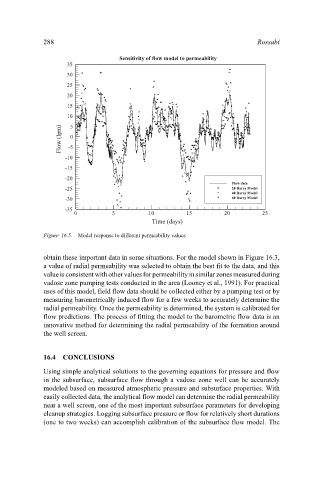
                           Figure 16.5.  Model response to different permeability values

                           obtain these important data in some situations. For the model shown in Figure 16.3,
                           a value of radial permeability was selected to obtain the best fit to the data, and this
                           value is consistent with other values for permeability in similar zones measured during
                           vadose zone pumping tests conducted in the area (Looney et al., 1991). For practical
                           uses of this model, field flow data should be collected either by a pumping test or by
                           measuring barometrically induced flow for a few weeks to accurately determine the
                           radial permeability. Once the permeability is determined, the system is calibrated for
                           flow predictions. The process of fitting the model to the barometric flow data is an
                           innovative method for determining the radial permeability of the formation around
                           the well screen.


                           16.4  CONCLUSIONS

                           Using simple analytical solutions to the governing equations for pressure and flow
                           in the subsurface, subsurface flow through a vadose zone well can be accurately
                           modeled based on measured atmospheric pressure and subsurface properties. With
                           easily collected data, the analytical flow model can determine the radial permeability
                           near a well screen, one of the most important subsurface parameters for developing
                           cleanup strategies. Logging subsurface pressure or flow for relatively short durations
                           (one to two weeks) can accomplish calibration of the subsurface flow model. The

