


Page 238 - Geochemical Remote Sensing of The Sub-Surface
P. 238
Light hydrocarbons for petroleum and gas prospecting                 211


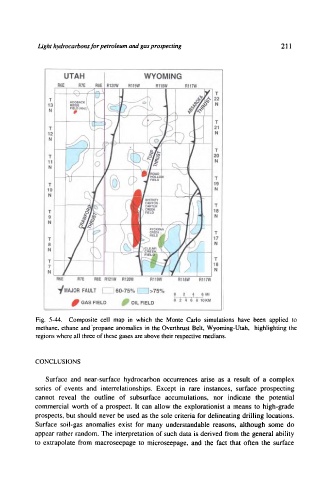
           Fig.  5-44.  Composite  cell  map  in  which  the  Monte  Carlo  simulations  have  been  applied  to
           methane,  ethane  and'propane  anomalies  in  the Overthrust  Belt,  Wyoming-Utah,  highlighting  the
           regions where all three of these gases are above their respective medians.


           CONCLUSIONS

              Surface  and  near-surface  hydrocarbon  occurrences  arise  as  a  result  of  a  complex
           series  of  events  and  interrelationships.  Except  in  rare  instances,  surface  prospecting
           cannot  reveal  the  outline  of  subsurface  accumulations,  nor  indicate  the  potential
           commercial  worth  of a  prospect.  It  can  allow  the  explorationist  a  means  to  high-grade
           prospects,  but  should  never  be  used  as  the  sole  criteria  for delineating  drilling  locations.
           Surface  soil-gas  anomalies  exist  for  many  understandable  reasons,  although  some  do
           appear  rather  random.  The  interpretation  of such  data  is derived  from  the  general  ability
           to  extrapolate  from  macroseepage  to  microseepage,  and  the  fact  that  often  the  surface

