


Page 137 - Introduction to Mineral Exploration
P. 137
120   M.K.G. WHATELEY


                                A     B                                     Photograph  1
                                         Negative
                               f
                                 L   Lens                                                Top


                       (H-h)=H′
                  H                                                                Base
                           a               b
                                                  Ground level
                         h
                                                    Sea level
                                                                                P 1               P
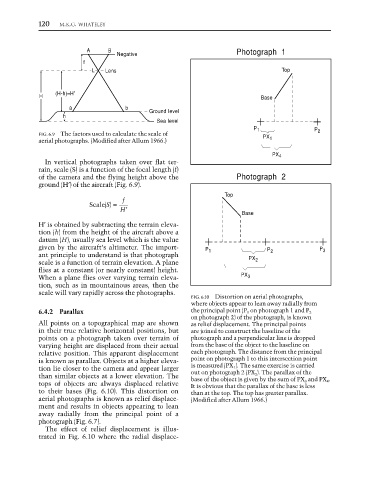
                  FIG. 6.9 The factors used to calculate the scale of              PX              2
                  aerial photographs. (Modified after Allum 1966.)                    1
                                                                                      PX 4
                    In vertical photographs taken over flat ter-
                  rain, scale (S) is a function of the focal length (f)
                  of the camera and the flying height above the              Photograph  2
                  ground (H′) of the aircraft (Fig. 6.9).
                                                                        Top
                                          f
                                        =
                                 Scale( )
                                     S
                                          H′                                 Base
                  H′ is obtained by subtracting the terrain eleva-
                  tion (h) from the height of the aircraft above a
                  datum (H), usually sea level which is the value
                  given by the aircraft’s altimeter. The import-  P 1               P 2             P 3
                  ant principle to understand is that photograph
                                                                               PX 2
                  scale is a function of terrain elevation. A plane
                  flies at a constant (or nearly constant) height.
                  When a plane flies over varying terrain eleva-              PX 3
                  tion, such as in mountainous areas, then the
                  scale will vary rapidly across the photographs.
                                                              FIG. 6.10 Distortion on aerial photographs,
                                                              where objects appear to lean away radially from
                  6.4.2 Parallax                              the principal point (P 1  on photograph 1 and P 2
                                                              on photograph 2) of the photograph, is known
                  All points on a topographical map are shown  as relief displacement. The principal points
                  in their true relative horizontal positions, but  are joined to construct the baseline of the
                  points on a photograph taken over terrain of  photograph and a perpendicular line is dropped
                  varying height are displaced from their actual  from the base of the object to the baseline on
                  relative position. This apparent displacement  each photograph. The distance from the principal
                  is known as parallax. Objects at a higher eleva-  point on photograph 1 to this intersection point
                  tion lie closer to the camera and appear larger  is measured (PX 1 ). The same exercise is carried
                  than similar objects at a lower elevation. The  out on photograph 2 (PX 2 ). The parallax of the
                                                              base of the object is given by the sum of PX 3  and PX 4 .
                  tops of objects are always displaced relative  It is obvious that the parallax of the base is less
                  to their bases (Fig. 6.10). This distortion on  than at the top. The top has greater parallax.
                  aerial photographs is known as relief displace-  (Modified after Allum 1966.)
                  ment and results in objects appearing to lean
                  away radially from the principal point of a
                  photograph (Fig. 6.7).
                    The effect of relief displacement is illus-
                  trated in Fig. 6.10 where the radial displace-

