


Page 301 - Introduction to Mineral Exploration
P. 301
284   M.K.G. WHATELEY & W.L. BARRETT


                  drive, multipurpose drill rig. These holes,
                  drilled alongside established farm tracks over
                  the higher parts of the farm, proved that
                  rock, harder than could be penetrated with the
                  augers, existed at exploitable depths over an
                  area large enough to contain around 20 Mt of
                  material. The results from this drilling enabled
                  the geologists to establish overburden distribu-
                  tion, overburden types, water-bearing zones,
                  the depth of weathering, and the gradient of
                  the bedrock surface (Bell & Hopkins 1988). At
                  this stage there was no proof of the nature
                  of the harder material since no samples were
                  recovered. Nevertheless, it was assumed that
                  the impenetrable rock was markfieldite and,
                  although the drill pattern was irregular, it
                  showed that there was only thin overburden.
                  Geologists calculated the resources and over-
                  burden ratios for a theoretical quarry, and
                  within the margins of error in such calcula-
                  tions there appeared to be sufficient resources
                  for a viable quarry. The auger drilling in Phase
                  2 is estimated to have cost between £2000
                  and £2500.
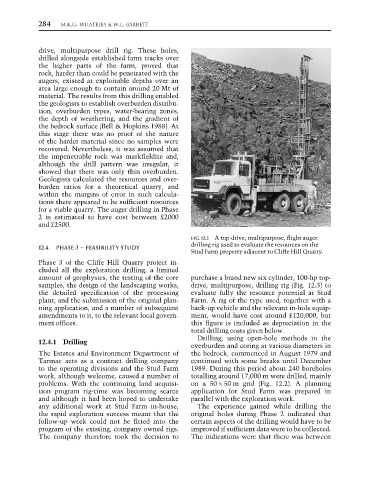
                                                              FIG. 12.3  A top-drive, multipurpose, flight auger
                                                              drilling rig used to evaluate the resources on the
                  12.4  PHASE 3  – FEASIBILITY STUDY
                                                              Stud Farm property adjacent to Cliffe Hill Quarry.
                  Phase 3 of the Cliffe Hill Quarry project in-
                  cluded all the exploration drilling, a limited
                  amount of geophysics, the testing of the core  purchase a brand new six cylinder, 100-hp top-
                  samples, the design of the landscaping works,  drive, multipurpose, drilling rig (Fig. 12.3) to
                  the detailed specification of the processing  evaluate fully the resource potential at Stud
                  plant, and the submission of the original plan-  Farm. A rig of the type used, together with a
                  ning application, and a number of subsequent  back-up vehicle and the relevant in-hole equip-
                  amendments to it, to the relevant local govern-  ment, would have cost around £120,000, but
                  ment offices.                                this figure is included as depreciation in the
                                                              total drilling costs given below.
                                                                Drilling, using open-hole methods in the
                  12.4.1 Drilling
                                                              overburden and coring at various diameters in
                  The Estates and Environment Department of   the bedrock, commenced in August 1979 and
                  Tarmac acts as a contract drilling company  continued with some breaks until December
                  to the operating divisions and the Stud Farm  1989. During this period about 240 boreholes
                  work, although welcome, caused a number of  totalling around 17,000 m were drilled, mainly
                  problems. With the continuing land acquisi-  on a 50 × 50 m grid (Fig. 12.2). A planning
                  tion program rig-time was becoming scarce   application for Stud Farm was prepared in
                  and although it had been hoped to undertake  parallel with the exploration work.
                  any additional work at Stud Farm in-house,    The experience gained while drilling the
                  the rapid exploration success meant that the  original holes during Phase 2 indicated that
                  follow-up work could not be fitted into the  certain aspects of the drilling would have to be
                  program of the existing, company owned rigs.  improved if sufficient data were to be collected.
                  The company therefore took the decision to  The indications were that there was between

