


Page 256 - Materials Chemistry, Second Edition
P. 256
244   LIFE  CYCLE ASSESSMENT HANDBOOK


                                                        -1.3
                               ^     ^     y     y      #°   y      &-    #··■

                          -Ö»    <<^   \O v  0 ^   ,<}>   <i>°  « ^   e ^
                         *                   °   . /   J     #    r£>


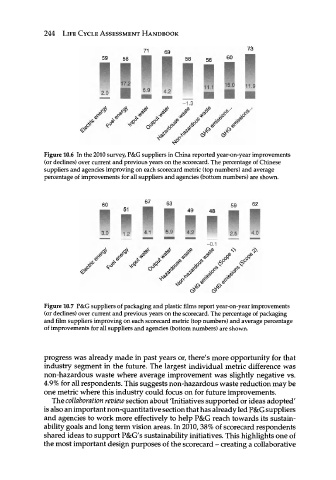
              Figure 10.6  In the 2010 survey, P&G suppliers in China reported year-on-year improvements
              (or declines) over current and previous years on the scorecard. The percentage of Chinese
              suppliers and agencies improving on each scorecard metric (top numbers) and  average
              percentage of improvements for all suppliers and agencies (bottom numbers) are shown.


                              1       51     **    63    49     48    5 9    62
                                60

                                     ■ I I ■ P                        2.5   4.0


                                      1 2   4.1    5.9   4.2
                                                               -0.1
                               <$   /  *<$  N / </ *Φ  ^  έβ 1  ^ έ?  ^  NN  Jt 0>
                                            <&
                             /
                         / ^ * S / / ./ ./
                                                 ^     «y jf         jf

                                                          &       &
              Figure 10.7 P&G suppliers of packaging and plastic films report year-on-year improvements
              (or declines) over current and previous years on the scorecard. The percentage of packaging
              and film suppliers improving on each scorecard metric (top numbers) and average percentage
              of improvements for all suppliers and agencies (bottom numbers) are shown.


              progress was already made in past years or, there's more opportunity  for  that
              industry  segment  in the  future.  The largest  individual  metric  difference  was
              non-hazardous   waste  where  average  improvement  was  slightly  negative vs.
              4.9% for all respondents. This suggests non-hazardous waste reduction may be
              one metric where this industry could focus on for future  improvements.
                 The collaboration review section about Initiatives supported or ideas adopted 7
              is also an important non-quantitative section that has already led P&G suppliers
              and  agencies to work more effectively  to help  P&G reach towards its sustain-
              ability goals and long term vision areas. In 2010,38% of scorecard  respondents
              shared ideas to support P&G's sustainability initiatives. This highlights one of
              the most important design purposes  of the scorecard -  creating a collaborative

