


Page 199 - Low Temperature Energy Systems with Applications of Renewable Energy
P. 199
186                 Low-Temperature Energy Systems with Applications of Renewable Energy


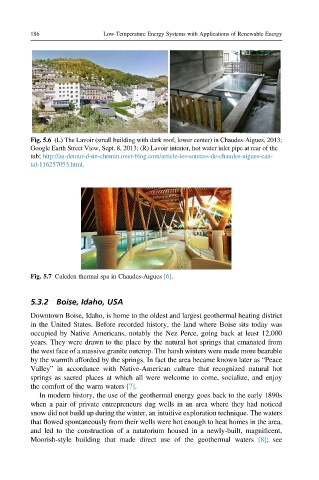
         Fig. 5.6 (L) The Lavoir (small building with dark roof, lower center) in Chaudes-Aigues, 2013;
         Google Earth Street View, Sept. 8, 2013; (R) Lavoir interior, hot water inlet pipe at rear of the
         tub; http://au-detour-d-un-chemin.over-blog.com/article-les-sources-de-chaudes-aigues-can-
         tal-116257053.html.


         Fig. 5.7 Caleden thermal spa in Chaudes-Aigues [6].


         5.3.2  Boise, Idaho, USA

         Downtown Boise, Idaho, is home to the oldest and largest geothermal heating district
         in the United States. Before recorded history, the land where Boise sits today was
         occupied by Native Americans, notably the Nez Perce, going back at least 12,000
         years. They were drawn to the place by the natural hot springs that emanated from
         the west face of a massive granite outcrop. The harsh winters were made more bearable
         by the warmth afforded by the springs. In fact the area became known later as “Peace
         Valley” in accordance with Native-American culture that recognized natural hot
         springs as sacred places at which all were welcome to come, socialize, and enjoy
         the comfort of the warm waters [7].
            In modern history, the use of the geothermal energy goes back to the early 1890s
         when a pair of private entrepreneurs dug wells in an area where they had noticed
         snow did not build up during the winter, an intuitive exploration technique. The waters
         that flowed spontaneously from their wells were hot enough to heat homes in the area,
         and led to the construction of a natatorium housed in a newly-built, magnificent,
         Moorish-style building that made direct use of the geothermal waters [8]; see

