


Page 200 - Low Temperature Energy Systems with Applications of Renewable Energy
P. 200
Heating with geothermal systems                                   187


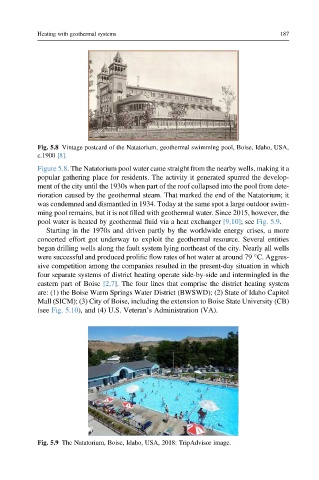
           Fig. 5.8 Vintage postcard of the Natatorium, geothermal swimming pool, Boise, Idaho, USA,
           c.1900 [8].
           Figure 5.8. The Natatorium pool water came straight from the nearby wells, making it a
           popular gathering place for residents. The activity it generated spurred the develop-
           ment of the city until the 1930s when part of the roof collapsed into the pool from dete-
           rioration caused by the geothermal steam. That marked the end of the Natatorium; it
           was condemned and dismantled in 1934. Today at the same spot a large outdoor swim-
           ming pool remains, but it is not filled with geothermal water. Since 2015, however, the
           pool water is heated by geothermal fluid via a heat exchanger [9,10]; see Fig. 5.9.
              Starting in the 1970s and driven partly by the worldwide energy crises, a more
           concerted effort got underway to exploit the geothermal resource. Several entities
           began drilling wells along the fault system lying northeast of the city. Nearly all wells

           were successful and produced prolific flow rates of hot water at around 79 C. Aggres-
           sive competition among the companies resulted in the present-day situation in which
           four separate systems of district heating operate side-by-side and intermingled in the
           eastern part of Boise [2,7]. The four lines that comprise the district heating system
           are: (1) the Boise Warm Springs Water District (BWSWD); (2) State of Idaho Capitol
           Mall (SICM); (3) City of Boise, including the extension to Boise State University (CB)
           (see Fig. 5.10), and (4) U.S. Veteran’s Administration (VA).


           Fig. 5.9 The Natatorium, Boise, Idaho, USA, 2018: TripAdvisor image.

