


Page 239 - Low Temperature Energy Systems with Applications of Renewable Energy
P. 239
226                 Low-Temperature Energy Systems with Applications of Renewable Energy


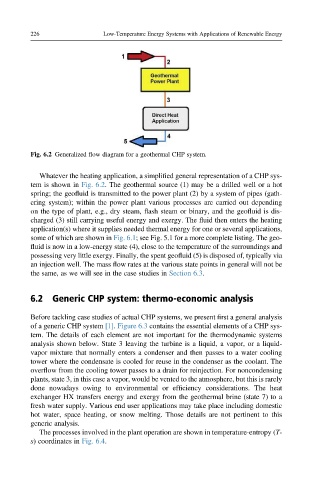
         Fig. 6.2 Generalized flow diagram for a geothermal CHP system.

            Whatever the heating application, a simplified general representation of a CHP sys-
         tem is shown in Fig. 6.2. The geothermal source (1) may be a drilled well or a hot
         spring; the geofluid is transmitted to the power plant (2) by a system of pipes (gath-
         ering system); within the power plant various processes are carried out depending
         on the type of plant, e.g., dry steam, flash steam or binary, and the geofluid is dis-
         charged (3) still carrying useful energy and exergy. The fluid then enters the heating
         application(s) where it supplies needed thermal energy for one or several applications,
         some of which are shown in Fig. 6.1; see Fig. 5.1 for a more complete listing. The geo-
         fluid is now in a low-energy state (4), close to the temperature of the surroundings and
         possessing very little exergy. Finally, the spent geofluid (5) is disposed of, typically via
         an injection well. The mass flow rates at the various state points in general will not be
         the same, as we will see in the case studies in Section 6.3.


         6.2   Generic CHP system: thermo-economic analysis

         Before tackling case studies of actual CHP systems, we present first a general analysis
         of a generic CHP system [1]. Figure 6.3 contains the essential elements of a CHP sys-
         tem. The details of each element are not important for the thermodynamic systems
         analysis shown below. State 3 leaving the turbine is a liquid, a vapor, or a liquid-
         vapor mixture that normally enters a condenser and then passes to a water cooling
         tower where the condensate is cooled for reuse in the condenser as the coolant. The
         overflow from the cooling tower passes to a drain for reinjection. For noncondensing
         plants, state 3, in this case a vapor, would be vented to the atmosphere, but this is rarely
         done nowadays owing to environmental or efficiency considerations. The heat
         exchanger HX transfers energy and exergy from the geothermal brine (state 7) to a
         fresh water supply. Various end user applications may take place including domestic
         hot water, space heating, or snow melting. Those details are not pertinent to this
         generic analysis.
            The processes involved in the plant operation are shown in temperature-entropy (T-
         s) coordinates in Fig. 6.4.

