


Page 244 - Low Temperature Energy Systems with Applications of Renewable Energy
P. 244
Geothermal energy in combined heat and power systems              231


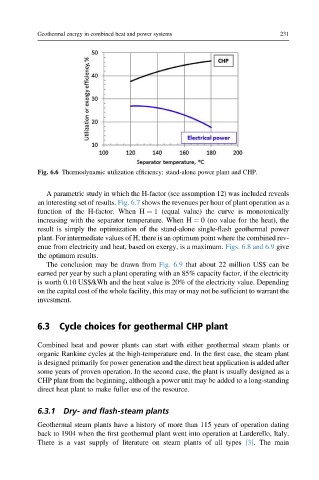
           Fig. 6.6 Thermodynamic utilization efficiency: stand-alone power plant and CHP.

              A parametric study in which the H-factor (see assumption 12) was included reveals
           an interesting set of results. Fig. 6.7 shows the revenues per hour of plant operation as a
           function of the H-factor. When H ¼ 1 (equal value) the curve is monotonically
           increasing with the separator temperature. When H ¼ 0 (no value for the heat), the
           result is simply the optimization of the stand-alone single-flash geothermal power
           plant. For intermediate values of H, there is an optimum point where the combined rev-
           enue from electricity and heat, based on exergy, is a maximum. Figs. 6.8 and 6.9 give
           the optimum results.
              The conclusion may be drawn from Fig. 6.9 that about 22 million US$ can be
           earned per year by such a plant operating with an 85% capacity factor, if the electricity
           is worth 0.10 US$/kWh and the heat value is 20% of the electricity value. Depending
           on the capital cost of the whole facility, this may or may not be sufficient to warrant the
           investment.


           6.3   Cycle choices for geothermal CHP plant


           Combined heat and power plants can start with either geothermal steam plants or
           organic Rankine cycles at the high-temperature end. In the first case, the steam plant
           is designed primarily for power generation and the direct heat application is added after
           some years of proven operation. In the second case, the plant is usually designed as a
           CHP plant from the beginning, although a power unit may be added to a long-standing
           direct heat plant to make fuller use of the resource.


           6.3.1  Dry- and flash-steam plants
           Geothermal steam plants have a history of more than 115 years of operation dating
           back to 1904 when the first geothermal plant went into operation at Larderello, Italy.
           There is a vast supply of literature on steam plants of all types [3]. The main

