


Page 315 - Machinery Component Maintenance
P. 315
Balancing of Machinery Components   297


                                                                 Principal Axis
                                        ------  4 if
                                                                      Inertia
                                                   -
                                                                 \Shaft   Axis

                                                              I

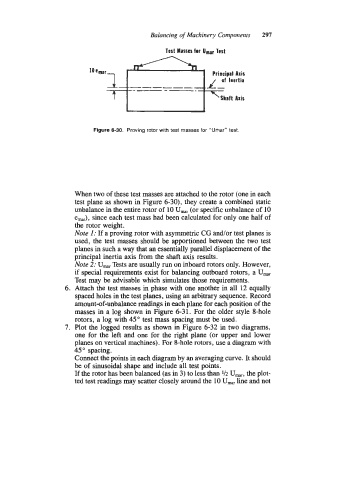
                             Figure 6-30. Proving rotor with test  masses for “Umar”  test.


                        When two of these test masses are attached to the rotor (one in each
                        test plane as shown in Figure 6-30), they create a combined static
                        unbalance in the entire rotor of  10 U,,   (or specific unbalance of  10
                        emr), since each test mass had been calculated for only one half of
                        the rotor weight.
                        Note I: If a proving rotor with asymmetric CG and/or test planes is
                        used,  the test masses should be apportioned between the two test
                        planes in such a way that an essentially parallel displacement of the
                        principal inertia axis from the shaft axis results.
                        Note 2:  U,   Tests are usually run on inboard rotors only. However,
                        if special requirements exist for balancing outboard rotors, a U,,,
                        Test may be advisable which simulates those requirements.
                     6.  Attach the test masses in phase with one another in all 12 equally
                        spaced holes in the test planes, using an arbitrary sequence. Record
                        amount-of-unbalance readings in each plane for each position of the
                        masses in  a log shown in Figure 6-31. For the older style 8-hole
                        rotors, a log with 45” test mass spacing must be used.
                     7.  Plot the logged results as shown in Figure 6-32 in two diagrams,
                        one for the left and one for the right plane (or upper and lower
                        planes on vertical machines). For %hole rotors, use a diagram with
                        45” spacing.
                        Connect the points in each diagram  by an averaging curve. It should
                        be of sinusoidal shape and include all test points.
                        If the rotor has been balanced (as in 3) to less than 1/z U,,,   the plot-
                        ted test readings may scatter closely around the 10 U,,,  line and not

