


Page 186 - Make Your Own PCBs with EAGLE from Schematic Designs to Finished Boards
P. 186
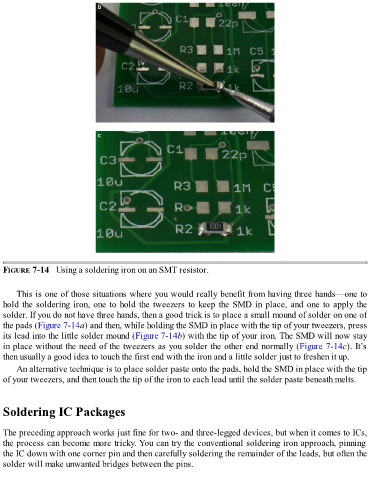
FIGURE 7-14   Using a soldering iron on an SMT resistor.


      This is one of those situations where you would really benefit from having three hands—one to
  hold the soldering iron, one to hold the tweezers to keep the SMD in place, and one to apply the
  solder. If you do not have three hands, then a good trick is to place a small mound of solder on one of
  the pads (Figure 7-14a) and then, while holding the SMD in place with the tip of your tweezers, press
  its lead into the little solder mound (Figure 7-14b) with the tip of your iron. The SMD will now stay

  in place without the need of the tweezers as you solder the other end normally (Figure 7-14c). It’s
  then usually a good idea to touch the first end with the iron and a little solder just to freshen it up.
      An alternative technique is to place solder paste onto the pads, hold the SMD in place with the tip

  of your tweezers, and then touch the tip of the iron to each lead until the solder paste beneath melts.


  Soldering IC Packages


  The preceding approach works just fine for two- and three-legged devices, but when it comes to ICs,

  the process can become more tricky. You can try the conventional soldering iron approach, pinning
  the IC down with one corner pin and then carefully soldering the remainder of the leads, but often the
  solder will make unwanted bridges between the pins.

