


Page 387 - Materials Science and Engineering An Introduction
P. 387
10.3  The Kinetics of Phase Transformations  •  359

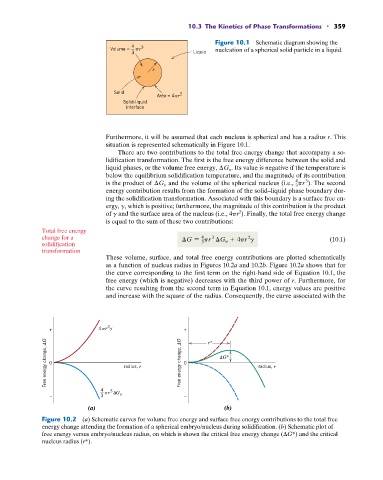
                                                                  Figure 10.1  Schematic diagram showing the
                                         4  3
                                  Volume =    r                   nucleation of a spherical solid particle in a liquid.
                                         3                 Liquid

                                               r


                                   Solid               2
                                                Area = 4 r
                                      Solid-liquid
                                       interface


                                 Furthermore, it will be assumed that each nucleus is spherical and has a radius r. This
                                 situation is represented schematically in Figure 10.1.
                                    There are two contributions to the total free energy change that accompany a so-
                                 lidification transformation. The first is the free energy difference between the solid and
                                 liquid phases, or the volume free energy,  G y . Its value is negative if the temperature is
                                 below the equilibrium solidification temperature, and the magnitude of its contribution
                                                                                          4
                                 is the product of  G y  and the volume of the spherical nucleus (i.e.,  pr ). The second
                                                                                             3
                                                                                          3
                                 energy contribution results from the formation of the solid–liquid phase boundary dur-
                                 ing the solidification transformation. Associated with this boundary is a surface free en-
                                 ergy, g, which is positive; furthermore, the magnitude of this contribution is the product
                                                                         2
                                 of g and the surface area of the nucleus (i.e., 4pr ). Finally, the total free energy change
                                 is equal to the sum of these two contributions:
              Total free energy
              change for a                               G = pr  G y + 4pr g                        (10.1)
                                                                 3
                                                              4
                                                                            2
              solidification                                  3
              transformation
                                 These volume, surface, and total free energy contributions are plotted schematically
                                 as a function of nucleus radius in Figures 10.2a and 10.2b. Figure 10.2a shows that for
                                 the curve corresponding to the first term on the right-hand side of Equation 10.1, the
                                 free energy (which is negative) decreases with the third power of r. Furthermore, for
                                 the curve resulting from the second term in Equation 10.1, energy values are positive
                                 and increase with the square of the radius. Consequently, the curve associated with the


                                 2

                +              4 r                      +      r*
               Free energy change,  G   0  radius, r   Free energy change,  G   0   G*  radius, r


                               4  r  G
                                  3
                –              3     v                  –
                           (a)                                      (b)
              Figure 10.2  (a) Schematic curves for volume free energy and surface free energy contributions to the total free
              energy change attending the formation of a spherical embryo/nucleus during solidification. (b) Schematic plot of
              free energy versus embryo/nucleus radius, on which is shown the critical free energy change ( G*) and the critical
              nucleus radius (r*).

