


Page 205 - Modular design for machine tools
P. 205
Application of Machine Tool Description to Engineering  Design    165


                                   File I                           File II
                                (Conventional MC)  D. F. 4  D. F. 1  (MC for small parts)
                 Spindle head   complex
                        D. F. 2
                                     D. F. 3
                                                                      D. F. 2
                         D. F. 1            D. F. 2        D. F. 1  D. F. 2  D. F. 3
                 Column  complex


                 Cross slide   complex  D. F. 2                     D. F. 2


                 Slide & base   complex  D. F. 1                  D. F. 1


                      D. F. 0    D. F. 1       D. F. 2      D. F. 1    D. F. 2
                 Table   complex


                     D. F. : Degree of freedom in movement function
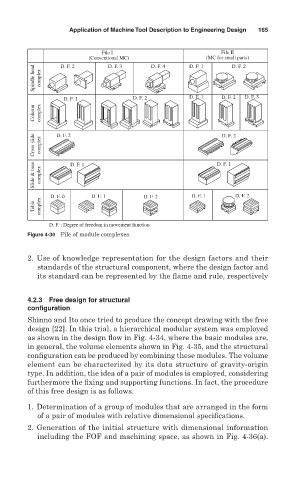
               Figure 4-30    File of module complexes.


               2. Use of knowledge representation for the design factors and their
                  standards of the structural component, where the design factor and
                  its standard can be represented by the flame and rule, respectively


               4.2.3    Free design for structural
               configuration
               Shinno and Ito once tried to produce the concept drawing with the free
               design [22]. In this trial, a hierarchical modular system was employed
               as shown in the design flow in Fig. 4-34, where the basic modules are,
               in general, the volume elements shown in Fig. 4-35, and the structural
               configuration can be produced by combining these modules. The volume
               element can be characterized by its data structure of  gravity-origin
               type. In addition, the idea of a pair of modules is employed, considering
               furthermore the fixing and supporting functions. In fact, the procedure
               of this free design is as follows.

               1. Determination of a group of modules that are arranged in the form
                  of a pair of modules with relative dimensional specifications.
               2. Generation of the initial structure with dimensional information
                  including the FOF and machining space, as shown in Fig. 4-36(a).

