


Page 627 - Book Hosokawa Nanoparticle Technology Handbook
P. 627
42 FABRICATION TECHNIQUE OF ORGANIC NANOCRYSTALS                              APPLICATIONS
                                                                 3. Size-dependence of optical properties for organic
                                                                 nanocrystals
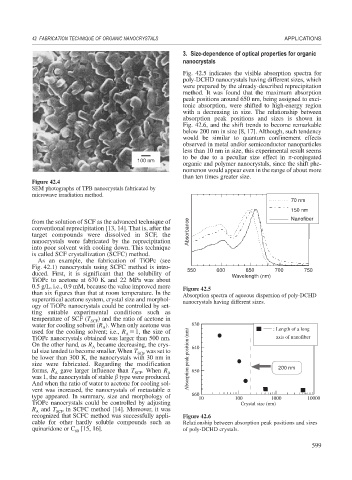
                                                                 Fig. 42.5 indicates the visible absorption spectra for
                                                                 poly-DCHD nanocrystals having different sizes, which
                                                                 were prepared by the already-described reprecipitation
                                                                 method. It was found that the maximum absorption
                                                                 peak positions around 650 nm, being assigned to exci-
                                                                 tonic absorption, were shifted to high-energy region
                                                                 with a decreasing in size.  The relationship between
                                                                 absorption peak positions and sizes is shown in
                                                                 Fig. 42.6, and the shift trends to become remarkable
                                                                 below 200 nm in size [8, 17]. Although, such tendency
                                                                 would be similar to quantum confinement effects
                                                                 observed in metal and/or semiconductor nanoparticles
                                                                 less than 10 nm in size, this experimental result seems
                                                                 to be due to a peculiar size effect in   -conjugated
                                                  100 nm
                                                                 organic and polymer nanocrystals, since the shift phe-
                                                                 nomenon would appear even in the range of about more
                                                                 than ten times greater size.
                  Figure 42.4
                  SEM photographs of TPB nanocrystals fabricated by
                  microwave irradiation method.
                                                                                                  70 nm
                                                                                                  150 nm
                  from the solution of SCF as the advanced technique of                           Nanofiber
                  conventional reprecipitation [13, 14]. That is, after the
                  target compounds were dissolved in SCF, the     Absorbance
                  nanocrystals were fabricated by the reprecipitation
                  into poor solvent with cooling down. This technique
                  is called SCF crystallization (SCFC) method.
                    As an example, the fabrication of TiOPc (see
                  Fig. 42.1)  nanocrystals using SCFC method is intro-  550  600    650      700      750
                  duced. First, it is significant that the solubility of        Wavelength (nm)
                  TiOPc to acetone at 670 K and 22 MPa was about
                  0.5 g/L, i.e., 0.9 mM, because the value improved more  Figure 42.5
                  than six figures than that at room temperature. In the  Absorption spectra of aqueous dispersion of poly-DCHD
                  supercritical acetone system, crystal size and morphol-  nanocrystals having different sizes.
                  ogy of TiOPc nanocrystals could be controlled by set-
                  ting suitable experimental conditions such as
                  temperature of SCF (T SCF ) and the ratio of acetone in
                  water for cooling solvent (R ). When only acetone was  630                 : Length of a long
                                        A
                  used for the cooling solvent; i.e., R  1, the size of
                                               A
                  TiOPc nanocrystals obtained was larger than 500 nm.                        axis of nanofiber
                  On the other hand, as R became decreasing, the crys-  640
                                    A
                  tal size tended to become smaller. When T SCF  was set to
                  be lower than 300 K, the nanocrystals with 30 nm in  Absorption peak position (nm)
                  size were fabricated. Regarding the modification                            200 nm
                  forms, R gave larger influence than  T SCF . When R A  650
                         A
                  was 1, the nanocrystals of stable   type were produced.
                  And when the ratio of water to acetone for cooling sol-
                  vent was increased, the nanocrystals of metastable
                  type appeared. In summary, size and morphology of  660 10      100        1000       10000
                  TiOPc nanocrystals could be controlled by adjusting              Crystal size (nm)
                  R and T SCF  in SCFC method [14]. Moreover, it was
                   A
                  recognized that SCFC method was successfully appli-  Figure 42.6
                  cable for other hardly soluble compounds such as  Relationship between absorption peak positions and sizes
                  quinaridone or C [15, 16].                     of poly-DCHD crystals.
                               60
                                                                                                        599

