


Page 128 - New Trends In Coal Conversion
P. 128
Coal and biomass cofiring: CFD modeling                             91


                                      Testing for modeling
                   Heterogeneous         validation         Radiative heat
                   reaction module                         transfer module


                                     Fluid transport module
                  Homogeneous                                Particle motion
                                 (Mass, momentum, energy and
                  reaction module                                module
                                 species conservation equations)
                         Pollutant                           Turbulence
                      formation module   Ash behavior          module
                                            module
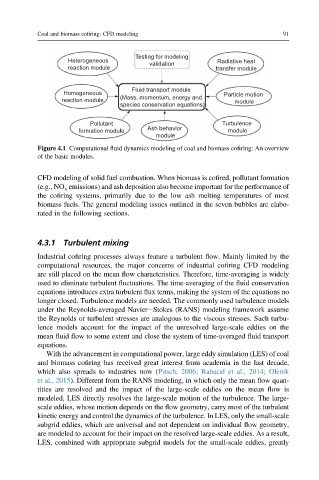
           Figure 4.1 Computational fluid dynamics modeling of coal and biomass cofiring: An overview
           of the basic modules.


           CFD modeling of solid fuel combustion. When biomass is cofired, pollutant formation
           (e.g., NO x emissions) and ash deposition also become important for the performance of
           the cofiring systems, primarily due to the low ash melting temperatures of most
           biomass fuels. The general modeling issues outlined in the seven bubbles are elabo-
           rated in the following sections.


           4.3.1  Turbulent mixing

           Industrial cofiring processes always feature a turbulent flow. Mainly limited by the
           computational resources, the major concerns of industrial cofiring CFD modeling
           are still placed on the mean flow characteristics. Therefore, time-averaging is widely
           used to eliminate turbulent fluctuations. The time-averaging of the fluid conservation
           equations introduces extra turbulent flux terms, making the system of the equations no
           longer closed. Turbulence models are needed. The commonly used turbulence models
           under the Reynolds-averaged NaviereStokes (RANS) modeling framework assume
           the Reynolds or turbulent stresses are analogous to the viscous stresses. Such turbu-
           lence models account for the impact of the unresolved large-scale eddies on the
           mean fluid flow to some extent and close the system of time-averaged fluid transport
           equations.
              With the advancement in computational power, large eddy simulation (LES) of coal
           and biomass cofiring has received great interest from academia in the last decade,
           which also spreads to industries now (Pitsch, 2006; Rabacal et al., 2014; Olenik
           et al., 2015). Different from the RANS modeling, in which only the mean flow quan-
           tities are resolved and the impact of the large-scale eddies on the mean flow is
           modeled, LES directly resolves the large-scale motion of the turbulence. The large-
           scale eddies, whose motion depends on the flow geometry, carry most of the turbulent
           kinetic energy and control the dynamics of the turbulence. In LES, only the small-scale
           subgrid eddies, which are universal and not dependent on individual flow geometry,
           are modeled to account for their impact on the resolved large-scale eddies. As a result,
           LES, combined with appropriate subgrid models for the small-scale eddies, greatly

