


Page 308 - Physical chemistry understanding our chemical world
P. 308
ACID–BASE INDICATORS    275


                                          OH                         OH
                                               OH                        O
                                    +
                         HO        O               HO         O
                                               OH                        O −
                                        OH                        OH
                               OH                        OH
                                    Red                       Blue
                                                        OH
                                                            O
                                      HO         O
                                                            OH

                                                     OH
                                            OH
                                                 Mauve

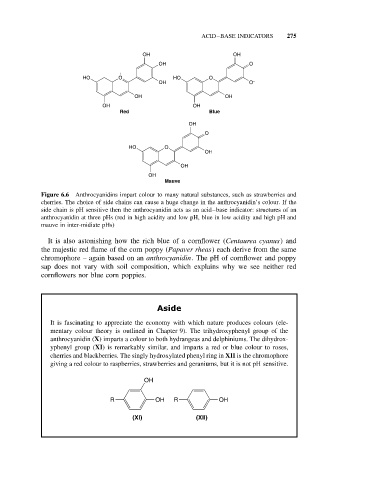
             Figure 6.6 Anthrocyanidins impart colour to many natural substances, such as strawberries and
             cherries. The choice of side chains can cause a huge change in the anthrocyanidin’s colour. If the
             side chain is pH sensitive then the anthrocyanidin acts as an acid–base indicator: structures of an
             anthrocyanidin at three pHs (red in high acidity and low pH, blue in low acidity and high pH and
             mauve in inter-midiate pHs)

               It is also astonishing how the rich blue of a cornflower (Centaurea cyanus) and
             the majestic red flame of the corn poppy (Papaver rheas) each derive from the same
             chromophore – again based on an anthrocyanidin. The pH of cornflower and poppy
             sap does not vary with soil composition, which explains why we see neither red
             cornflowers nor blue corn poppies.


                                               Aside

                It is fascinating to appreciate the economy with which nature produces colours (ele-
                mentary colour theory is outlined in Chapter 9). The trihydroxyphenyl group of the
                anthrocyanidin (X) imparts a colour to both hydrangeas and delphiniums. The dihydrox-
                yphenyl group (XI) is remarkably similar, and imparts a red or blue colour to roses,
                cherries and blackberries. The singly hydroxylated phenyl ring in XII is the chromophore
                giving a red colour to raspberries, strawberries and geraniums, but it is not pH sensitive.
                                           OH


                                 R            OH   R             OH

                                       (XI)               (XII)

