


Page 514 - Refining Biomass Residues for Sustainable Energy and Bioproducts
P. 514
470                     Refining Biomass Residues for Sustainable Energy and Bioproducts


                                      Proteins and
                                        peptides
                                      Fish, mollusks, and
                                        crustaceans      Polysaccharides
                  Vitamins and
                                                          Macro and micro
                    minerals
                                                          algae, shrimp,
                                                           crab, lobster,
                    Seaweeds
                                                          prawn, and krill
                                     Functional foods
                                     1. Marine sources of
                                            bioactive molecules
                                      2. Marine derived
                                              bioactive compounds
                                                           Fatty acids
                 Marine enzymes
                (proteases, lipases)                      Almost all marine
                                                             sources
                                         Phenolic
                  Fish, mollusks, and
                    crustaceans       compounds and
                                         pigments
                                        Marine bacteria
                                       and marine algae
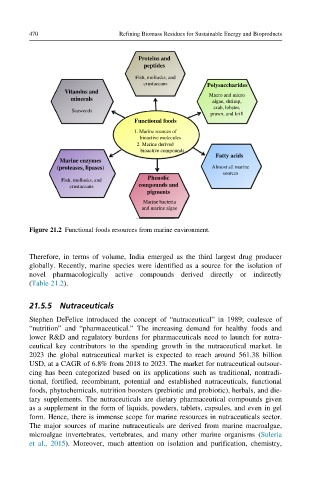
         Figure 21.2 Functional foods resources from marine environment.


         Therefore, in terms of volume, India emerged as the third largest drug producer
         globally. Recently, marine species were identified as a source for the isolation of
         novel pharmacologically active compounds derived directly or indirectly
         (Table 21.2).


         21.5.5 Nutraceuticals

         Stephen DeFelice introduced the concept of “nutraceutical” in 1989; coalesce of
         “nutrition” and “pharmaceutical.” The increasing demand for healthy foods and
         lower R&D and regulatory burdens for pharmaceuticals need to launch for nutra-
         ceutical key contributors to the spending growth in the nutraceutical market. In
         2023 the global nutraceutical market is expected to reach around 561.38 billion
         USD, at a CAGR of 6.8% from 2018 to 2023. The market for nutraceutical outsour-
         cing has been categorized based on its applications such as traditional, nontradi-
         tional, fortified, recombinant, potential and established nutraceuticals, functional
         foods, phytochemicals, nutrition boosters (prebiotic and probiotic), herbals, and die-
         tary supplements. The nutraceuticals are dietary pharmaceutical compounds given
         as a supplement in the form of liquids, powders, tablets, capsules, and even in gel
         form. Hence, there is immense scope for marine resources in nutraceuticals sector.
         The major sources of marine nutraceuticals are derived from marine macroalgae,
         microalgae invertebrates, vertebrates, and many other marine organisms (Suleria
         et al., 2015). Moreover, much attention on isolation and purification, chemistry,

