


Page 563 - Refining Biomass Residues for Sustainable Energy and Bioproducts
P. 563
Comparative life-cycle analysis of synthetic detergents and biosurfactants—an overview  513


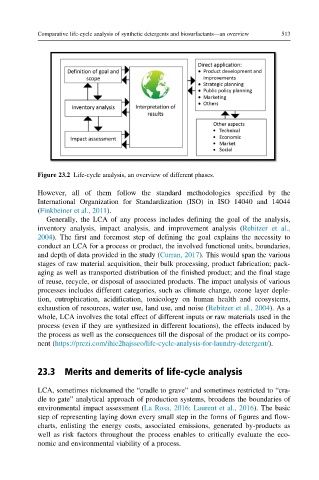
           Figure 23.2 Life-cycle analysis, an overview of different phases.

           However, all of them follow the standard methodologies specified by the
           International Organization for Standardization (ISO) in ISO 14040 and 14044
           (Finkbeiner et al., 2011).
              Generally, the LCA of any process includes defining the goal of the analysis,
           inventory analysis, impact analysis, and improvement analysis (Rebitzer et al.,
           2004). The first and foremost step of defining the goal explains the necessity to
           conduct an LCA for a process or product, the involved functional units, boundaries,
           and depth of data provided in the study (Curran, 2017). This would span the various
           stages of raw material acquisition, their bulk processing, product fabrication; pack-
           aging as well as transported distribution of the finished product; and the final stage
           of reuse, recycle, or disposal of associated products. The impact analysis of various
           processes includes different categories, such as climate change, ozone layer deple-
           tion, eutrophication, acidification, toxicology on human health and ecosystems,
           exhaustion of resources, water use, land use, and noise (Rebitzer et al., 2004). As a
           whole, LCA involves the total effect of different inputs or raw materials used in the
           process (even if they are synthesized in different locations), the effects induced by
           the process as well as the consequences till the disposal of the product or its compo-
           nent (https://prezi.com/ihie2hajsseo/life-cycle-analysis-for-laundry-detergent/).


           23.3    Merits and demerits of life-cycle analysis

           LCA, sometimes nicknamed the “cradle to grave” and sometimes restricted to “cra-
           dle to gate” analytical approach of production systems, broadens the boundaries of
           environmental impact assessment (La Rosa, 2016; Laurent et al., 2016). The basic
           step of representing laying down every small step in the forms of figures and flow-
           charts, enlisting the energy costs, associated emissions, generated by-products as
           well as risk factors throughout the process enables to critically evaluate the eco-
           nomic and environmental viability of a process.

