


Page 243 - Social Marketing for Public Health Global Trends and Success Stories
P. 243
57977_CH09_final.qxd:Cheng  11/5/09  4:42 PM  Page 216


                216    CHAPTER 9  ■ Creating a Commercial Market for Insecticide-Treated Mosquito Nets


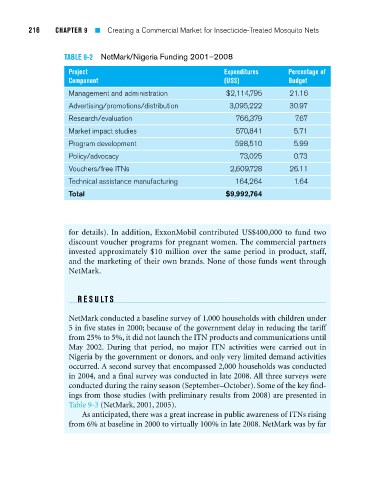
                          TABLE 9-2  NetMark/Nigeria Funding 2001–2008
                           Project                                   Expenditures     Percentage of
                           Component                                 (US$)            Budget
                           Management and administration             $2,114,795       21.16
                           Advertising/promotions/distribution        3,095,222       30.97
                           Research/evaluation                          766,379         7.67
                           Market impact studies                        570,841         5.71
                           Program development                          598,510         5.99
                           Policy/advocacy                               73,025         0.73
                           Vouchers/free ITNs                         2,609,728       26.11

                           Technical assistance manufacturing           164,264         1.64
                           Total                                     $9,992,764


                           for details). In addition, ExxonMobil contributed US$400,000 to fund two
                           discount voucher programs for pregnant women. The commercial partners
                           invested approximately $10 million over the same period in product, staff,
                           and the marketing of their own brands. None of those funds went through
                           NetMark.


                             RESU LT S


                           NetMark conducted a baseline survey of 1,000 households with children under
                           5 in five states in 2000; because of the government delay in reducing the tariff
                           from 25% to 5%, it did not launch the ITN products and communications until
                           May 2002. During that period, no major ITN activities were carried out in
                           Nigeria by the government or donors, and only very limited demand activities
                           occurred. A second survey that encompassed 2,000 households was conducted
                           in 2004, and a final survey was conducted in late 2008. All three surveys were
                           conducted during the rainy season (September–October). Some of the key find-
                           ings from those studies (with preliminary results from 2008) are presented in
                           Table 9-3 (NetMark, 2001, 2005).
                              As anticipated, there was a great increase in public awareness of ITNs rising
                           from 6% at baseline in 2000 to virtually 100% in late 2008. NetMark was by far

