


Page 254 - Statistics II for Dummies
P. 254
238        Part IV: Building Strong Connections with Chi-Square Tests


                                One of the variables that wasn’t considered when I made Table 13-5 was the
                                difficulty level of the video game being played. Suppose I go back and include
                                the difficulty level of the chosen game each time, along with each result (won
                                or lost). Level one indicates easy video games, comparable to the level of Ms.
                                Pac Man (games that are my speed), and level two means more challenging
                                video games (like war games or sophisticated strategy games).

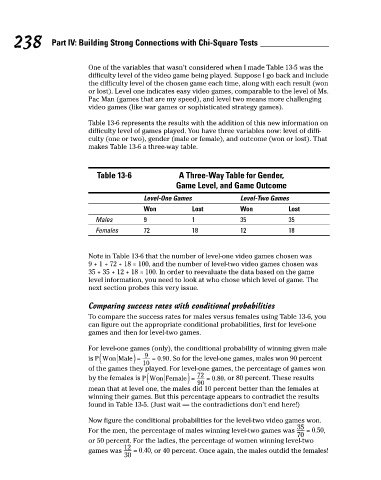
                                Table 13-6 represents the results with the addition of this new information on
                                difficulty level of games played. You have three variables now: level of diffi-
                                culty (one or two), gender (male or female), and outcome (won or lost). That
                                makes Table 13-6 a three-way table.


                                   Table 13-6            A Three-Way Table for Gender,
                                                         Game Level, and Game Outcome
                                                Level-One Games           Level-Two Games
                                                Won          Lost         Won           Lost
                                  Males         9            1            35            35
                                  Females       72           18           12            18


                                Note in Table 13-6 that the number of level-one video games chosen was
                                9 + 1 + 72 + 18 = 100, and the number of level-two video games chosen was
                                35 + 35 + 12 + 18 = 100. In order to reevaluate the data based on the game
                                level information, you need to look at who chose which level of game. The
                                next section probes this very issue.

                                Comparing success rates with conditional probabilities
                                To compare the success rates for males versus females using Table 13-6, you
                                can figure out the appropriate conditional probabilities, first for level-one
                                games and then for level-two games.

                                For level-one games (only), the conditional probability of winning given male
                                is                     . So for the level-one games, males won 90 percent
                                of the games they played. For level-one games, the percentage of games won
                                by the females is                     , or 80 percent. These results
                                mean that at level one, the males did 10 percent better than the females at
                                winning their games. But this percentage appears to contradict the results
                                found in Table 13-5. (Just wait — the contradictions don’t end here!)
                                Now figure the conditional probabilities for the level-two video games won.
                                For the men, the percentage of males winning level-two games was   ,
                                or 50 percent. For the ladies, the percentage of women winning level-two
                                games was         , or 40 percent. Once again, the males outdid the females!


          20_466469-ch13.indd   238                                                                   7/24/09   9:48:01 AM

