


Page 284 - Statistics II for Dummies
P. 284
268        Part IV: Building Strong Connections with Chi-Square Tests


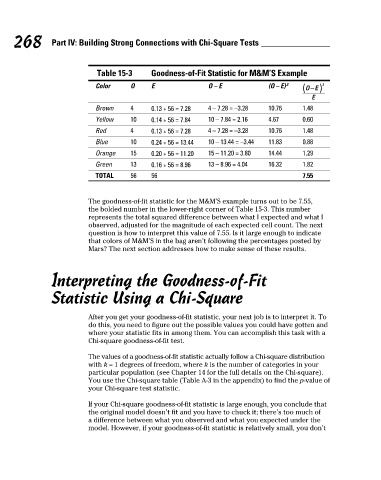
                                   Table 15-3     Goodness-of-Fit Statistic for M&M’S Example
                                  Color     O     E               O – E           (O – E)  2


                                  Brown     4     0.13 * 56 = 7.28  4 – 7.28 = –3.28  10.76  1.48
                                  Yellow    10    0.14 * 56 = 7.84  10 – 7.84 = 2.16  4.67  0.60
                                  Red       4     0.13 * 56 = 7.28  4 – 7.28 = –3.28  10.76  1.48
                                  Blue      10    0.24 * 56 = 13.44  10 – 13.44 = –3.44  11.83  0.88
                                  Orange    15    0.20 * 56 = 11.20  15 – 11.20 = 3.80  14.44  1.29
                                  Green     13    0.16 * 56 = 8.96  13 – 8.96 = 4.04  16.32  1.82
                                  TOTAL     56    56                                        7.55


                                The goodness-of-fit statistic for the M&M’S example turns out to be 7.55,
                                the bolded number in the lower-right corner of Table 15-3. This number
                                represents the total squared difference between what I expected and what I
                                observed, adjusted for the magnitude of each expected cell count. The next
                                question is how to interpret this value of 7.55. Is it large enough to indicate
                                that colors of M&M’S in the bag aren’t following the percentages posted by
                                Mars? The next section addresses how to make sense of these results.


                      Interpreting the Goodness-of-Fit

                      Statistic Using a Chi-Square


                                After you get your goodness-of-fit statistic, your next job is to interpret it. To
                                do this, you need to figure out the possible values you could have gotten and
                                where your statistic fits in among them. You can accomplish this task with a
                                Chi-square goodness-of-fit test.

                                The values of a goodness-of-fit statistic actually follow a Chi-square distribution
                                with k – 1 degrees of freedom, where k is the number of categories in your
                                particular population (see Chapter 14 for the full details on the Chi-square).
                                You use the Chi-square table (Table A-3 in the appendix) to find the p-value of
                                your Chi-square test statistic.

                                If your Chi-square goodness-of-fit statistic is large enough, you conclude that
                                the original model doesn’t fit and you have to chuck it; there’s too much of
                                a difference between what you observed and what you expected under the
                                model. However, if your goodness-of-fit statistic is relatively small, you don’t


          22_466469-ch15.indd   268                                                                   7/24/09   9:52:21 AM

