


Page 522 -
P. 522
118    DONALD L. CROOKS, ROBERT S. GOODMAN, AND JOHN BURBRIDGE


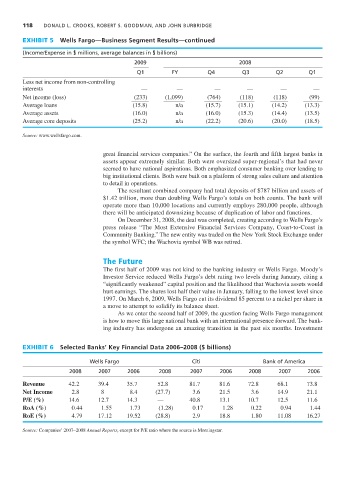
           EXHIBIT 5   Wells Fargo—Business Segment Results—continued
           (Income/Expense in $ millions, average balances in $ billions)
                                                2009                              2008
                                                 Q1         FY          Q4         Q3         Q2         Q1
           Less net income from non-controlling
           interests                              —           —           —          —          —          —
           Net income (loss)                    (233)     (1,099)       (764)     (118)      (118)       (99)
           Average loans                       (15.8)        n/a       (15.7)     (15.1)     (14.2)     (13.3)
           Average assets                      (16.0)        n/a       (16.0)     (15.3)     (14.4)     (13.5)
           Average core deposits               (25.2)        n/a       (22.2)     (20.6)     (20.0)     (18.5)

           Source: www.wellsfargo.com.


                                      great financial services companies.” On the surface, the fourth and fifth largest banks in
                                      assets appear extremely similar. Both were oversized super-regional’s that had never
                                      seemed to have national aspirations. Both emphasized consumer banking over lending to
                                      big institutional clients. Both were built on a platform of strong sales culture and attention
                                      to detail in operations.
                                          The resultant combined company had total deposits of $787 billion and assets of
                                      $1.42 trillion, more than doubling Wells Fargo’s totals on both counts. The bank will
                                      operate more than 10,000 locations and currently employs 280,000 people, although
                                      there will be anticipated downsizing because of duplication of labor and functions.
                                          On December 31, 2008, the deal was completed, creating according to Wells Fargo’s
                                      press release “The Most Extensive Financial Services Company, Coast-to-Coast in
                                      Community Banking.” The new entity was traded on the New York Stock Exchange under
                                      the symbol WFC; the Wachovia symbol WB was retired.


                                      The Future
                                      The first half of 2009 was not kind to the banking industry or Wells Fargo. Moody’s
                                      Investor Service reduced Wells Fargo’s debt rating two levels during January, citing a
                                      “significantly weakened” capital position and the likelihood that Wachovia assets would
                                      hurt earnings. The shares lost half their value in January, falling to the lowest level since
                                      1997. On March 6, 2009, Wells Fargo cut its dividend 85 percent to a nickel per share in
                                      a move to attempt to solidify its balance sheet.
                                          As we enter the second half of 2009, the question facing Wells Fargo management
                                      is how to move this large national bank with an international presence forward. The bank-
                                      ing industry has undergone an amazing transition in the past six months. Investment


           EXHIBIT 6   Selected Banks’ Key Financial Data 2006–2008 ($ billions)

                                 Wells Fargo                       Citi                   Bank of America
                          2008      2007      2006      2008      2007      2006     2008      2007      2006

           Revenue        42.2      39.4     35.7      52.8       81.7      81.6     72.8      68.1     73.8
           Net Income      2.8       8        8.4      (27.7)      3.6      21.5      3.6      14.9     21.1
           P/E (%)        14.6      12.7     14.3      —          40.8      13.1     10.7      12.5     11.6
           RoA (%)         0.44      1.55     1.73      (1.28)     0.17      1.28     0.22      0.94     1.44
           RoE (%)         4.79     17.12    19.52     (28.8)      2.9      18.8      1.80     11.08    16.27

           Source: Companies’ 2007–2008 Annual Reports, except for P/E ratio where the source is Morningstar.

