


Page 329 - Structural Steel Designers Handbook AISC, AASHTO, AISI, ASTM, and ASCE-07 Design Standards
P. 329
Brockenbrough_Ch07.qxd  9/29/05  5:17 PM  Page 7.13


                                                     FLOOR AND ROOF SYSTEMS


                                                                                 FLOOR AND ROOF SYSTEMS  7.13


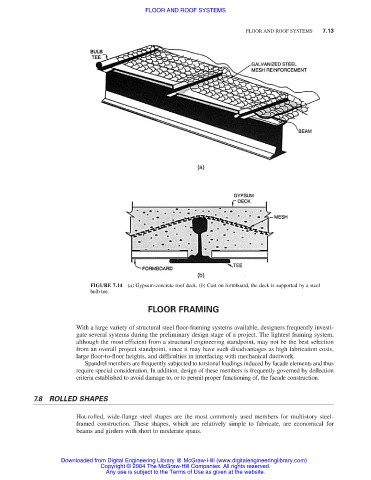
                                      FIGURE 7.14  (a) Gypsum-concrete roof deck. (b) Cast on formboard, the deck is supported by a steel
                                      bulb tee.

                                                      FLOOR FRAMING

                                  With a large variety of structural steel floor-framing systems available, designers frequently investi-
                                  gate several systems during the preliminary design stage of a project. The lightest framing system,
                                  although the most efficient from a structural engineering standpoint, may not be the best selection
                                  from an overall project standpoint, since it may have such disadvantages as high fabrication costs,
                                  large floor-to-floor heights, and difficulties in interfacing with mechanical ductwork.
                                    Spandrel members are frequently subjected to torsional loadings induced by facade elements and thus
                                  require special consideration. In addition, design of these members is frequently governed by deflection
                                  criteria established to avoid damage to, or to permit proper functioning of, the facade construction.

                      7.8 ROLLED SHAPES


                                  Hot-rolled, wide-flange steel shapes are the most commonly used members for multistory steel-
                                  framed construction.  These shapes, which are relatively simple to fabricate, are economical for
                                  beams and girders with short to moderate spans.


                              Downloaded from Digital Engineering Library @ McGraw-Hill (www.digitalengineeringlibrary.com)
                                         Copyright © 2004 The McGraw-Hill Companies. All rights reserved.
                                          Any use is subject to the Terms of Use as given at the website.

