


Page 123 - Materials Chemistry, Second Edition
P. 123
Ch003-P373623.qxd  3/22/07  5:29 PM  Page 102
                     Sustainable Industrial Design and Waste Management
                102
                                                         1. Surface
                            2. Gas 1972       Statoil    water 1961
                                              refinery               Lake Tisso
                     Gyproc          9. Steam 1982  3. 1973

                           5. Fly Ash 1979    Asnaes       8. Steam 1982
                                           power station


                                                        6. Heat 1980/89
                                                                    NovoNordisk
                     Cement                           Fish
                                       7. Heat 1982                     +
                     industry                         farms
                                                                    Novozymes
                                                                         4. Biomass/
                                                                         NovoGro 1976

                                          The Municipality            Farms
                                           of Kalundborg

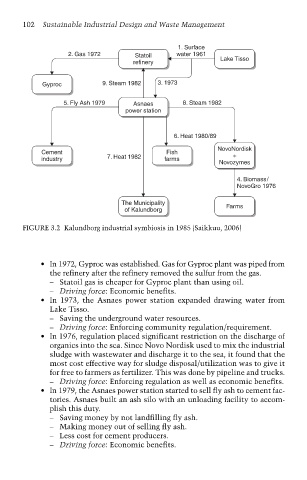
                FIGURE 3.2 Kalundborg industrial symbiosis in 1985 (Saikkuu, 2006)


                     • In 1972, Gyproc was established. Gas for Gyproc plant was piped from
                       the refinery after the refinery removed the sulfur from the gas.
                       – Statoil gas is cheaper for Gyproc plant than using oil.
                       – Driving force: Economic benefits.
                     • In 1973, the Asnaes power station expanded drawing water from
                       Lake Tisso.
                       – Saving the underground water resources.
                       – Driving force: Enforcing community regulation/requirement.
                     • In 1976, regulation placed significant restriction on the discharge of
                       organics into the sea. Since Novo Nordisk used to mix the industrial
                       sludge with wastewater and discharge it to the sea, it found that the
                       most cost effective way for sludge disposal/utilization was to give it
                       for free to farmers as fertilizer. This was done by pipeline and trucks.
                       – Driving force: Enforcing regulation as well as economic benefits.
                     • In 1979, the Asnaes power station started to sell fly ash to cement fac-
                       tories. Asnaes built an ash silo with an unloading facility to accom-
                       plish this duty.
                       – Saving money by not landfilling fly ash.
                       – Making money out of selling fly ash.
                       – Less cost for cement producers.
                       – Driving force: Economic benefits.

