


Page 124 - Materials Chemistry, Second Edition
P. 124
Ch003-P373623.qxd  3/22/07  5:29 PM  Page 103
                                     Sustainable Development and Industrial Ecology
                              2. Gas 1972                     1. Surface           103
                        13. Ammonium thio sulphate  Statoil   water 1961  Lake Tisso
                                                 refinery
                             14. Tech
                           water 1991       9. Steam   11. Cooling
                                               1982   water
                                                      1987
                                 Reuse
                    Gyproc                                            10. Surface
                                 basin                                water 1987
                                          15. Tech
                                            water       3. 1973
                            18. Drain
                           water 1995        1991
                                                 Asnaes       8. Steam 1982
                      16. Gypsum 1993          power station
                                      5. Fly ash
                                      1979               6. Heat 1980/89
                                                                        NovoNordisk
                                  Cement               Fish
                                  industry             farms
                                                                        Novozymes
                                                                    12.
                                                                    Yeast    4. Biomass/
                                                 7. Heat 1982                NovoGro
                                                                    slurry
                                                                    1989     1976
                     Bioteknisk  19. Sludge
                     Jordrens              The Municipality               Farms
                      Soilrem               of Kalundborg  17. Waste
                                                        water 1995
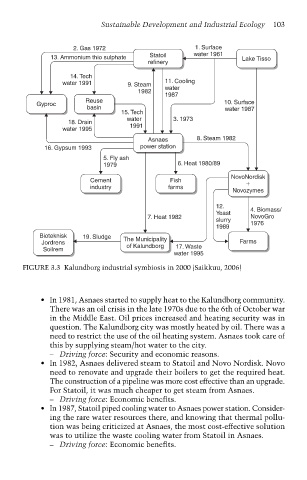
                FIGURE 3.3 Kalundborg industrial symbiosis in 2000 (Saikkuu, 2006)


                     • In 1981, Asnaes started to supply heat to the Kalundborg community.
                       There was an oil crisis in the late 1970s due to the 6th of October war
                       in the Middle East. Oil prices increased and heating security was in
                       question. The Kalundborg city was mostly heated by oil. There was a
                       need to restrict the use of the oil heating system. Asnaes took care of
                       this by supplying steam/hot water to the city.
                       – Driving force: Security and economic reasons.
                     • In 1982, Asnaes delivered steam to Statoil and Novo Nordisk. Novo
                       need to renovate and upgrade their boilers to get the required heat.
                       The construction of a pipeline was more cost effective than an upgrade.
                       For Statoil, it was much cheaper to get steam from Asnaes.
                       – Driving force: Economic benefits.
                     • In 1987, Statoil piped cooling water to Asnaes power station. Consider-
                       ing the rare water resources there, and knowing that thermal pollu-
                       tion was being criticized at Asnaes, the most cost-effective solution
                       was to utilize the waste cooling water from Statoil in Asnaes.
                       – Driving force: Economic benefits.

