


Page 349 - Sustainable On-Site CHP Systems Design, Construction, and Operations
P. 349
322    Ca s e  S t u d y 1


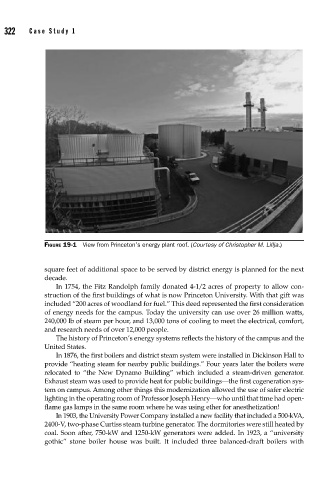
             FIGURE 19-1  View from Princeton’s energy plant roof. (Courtesy of Christopher M. Lillja.)


             square feet of additional space to be served by district energy is planned for the next
             decade.
                In 1754, the Fitz Randolph family donated 4-1/2 acres of property to allow con-
             struction of the first buildings of what is now Princeton University. With that gift was
             included “200 acres of woodland for fuel.” This deed represented the first consideration
             of energy needs for the campus. Today the university can use over 26 million watts,
             240,000 lb of steam per hour, and 13,000 tons of cooling to meet the electrical, comfort,
             and research needs of over 12,000 people.
                The history of Princeton’s energy systems reflects the history of the campus and the
             United States.
                In 1876, the first boilers and district steam system were installed in Dickinson Hall to
             provide “heating steam for nearby public buildings.” Four years later the boilers were
             relocated to “the New Dynamo Building” which included a steam-driven generator.
             Exhaust steam was used to provide heat for public buildings—the first cogeneration sys-
             tem on campus. Among other things this modernization allowed the use of safer electric
             lighting in the operating room of Professor Joseph Henry—who until that time had open-
             flame gas lamps in the same room where he was using ether for anesthetization!
                In 1903, the University Power Company installed a new facility that included a 500-kVA,
             2400-V, two-phase Curtiss steam turbine generator. The dormitories were still heated by
             coal. Soon after, 750-kW and 1250-kW generators were added. In 1923, a “university
             gothic” stone boiler house was built. It included three balanced-draft boilers with

