


Page 203 - Theory and Design of Air Cushion Craft
P. 203
186  Stability


                              80  -

                                                Plough-in  region


                              40  -
                                                  operating
                           I                 Safely region


                                            20         40         60
                                                v s(kn)


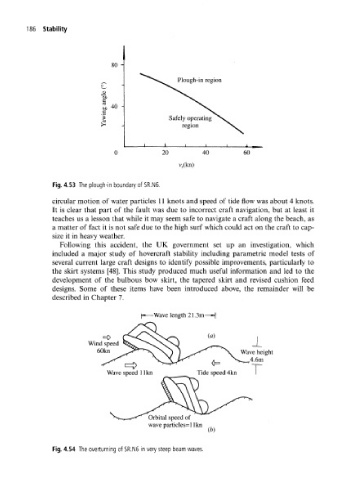
              Fig. 4.53  The plough-in  boundary  of  SR.N6.
             circular motion  of  water particles  11 knots and  speed  of  tide flow was about  4 knots.
             It  is clear  that  part  of  the  fault  was due  to  incorrect  craft  navigation, but  at  least it
             teaches  us a lesson that while it may seem  safe  to navigate a craft  along the beach,  as
             a matter  of  fact  it is not  safe  due to the high surf  which could act on the craft to  cap-
             size it in heavy weather.
               Following  this  accident,  the  UK  government  set  up  an  investigation,  which
             included  a  major  study  of  hovercraft  stability  including  parametric  model  tests  of
             several  current  large  craft  designs to  identify  possible  improvements, particularly  to
             the  skirt systems  [48].  This  study produced  much  useful  information  and  led to  the
             development  of  the  bulbous  bow  skirt,  the  tapered  skirt  and  revised  cushion  feed
             designs.  Some  of  these  items  have  been  introduced  above,  the  remainder  will  be
             described  in Chapter  7.

                                         Wave length 21.3m—|


                       Wind  speed
                          60kn                                   Wave height
                                                                    4.6m


                                        Orbital  speed of
                                        wave particles=l Ikn
                                                        (b)

             Fig. 4.54  The overturning  of  SR.N6  in very  steep beam waves.

